
The operating room is where a hospital spends the most on supplies and where a stockout results in the highest cost. A single case can draw on hundreds of items, from sutures and trays to high-cost implants, and much of it is counted by hand between cases. When a supply is short, expired, or logged incorrectly, the cost shows up as a delayed start, a rush order mid-case, a write-off, or a charge that never reaches the bill. The goal is simple to state and hard to sustain: the right product, in the right place, at the right time, without tying up capital in excess stock.
This guide explains what operating room supply management involves, why it is harder than general hospital inventory, and the best practices and technology that keep OR supplies accurate. It is written for supply chain leaders, perioperative managers, and materials management teams who want fewer surprises in the room and cleaner data behind it.
What Is Operating Room Supply Management?
Operating room supply management is the process of tracking, stocking, and replenishing the surgical supplies, instruments, and implants used in the OR so the right items are available for every case without tying up capital in excess stock. It covers preference cards, PAR levels, point-of-use documentation, expiry control, consignment and bill-only items, and the reordering that keeps shelves and case carts ready.
It sits inside the wider hospital supply chain but has its own rules. OR supplies are higher in value, change faster with surgeon preference, and carry tighter documentation needs because usage has to be captured against a specific patient and case. That combination is why general inventory methods often fall short in the OR.
Why Is Operating Room Supply Management So Difficult?
Perioperative teams manage some of the most complex inventory in the building. A few reasons stand out.
High-value supplies and thin margins
Implants, energy devices, and specialty disposables can cost hundreds or thousands of dollars each. Overstock ties up capital and risks expiry, while a stockout can delay or cancel a case. The room to be wrong is small.
Preference cards that drift out of date
Preference cards are meant to list exactly what a surgeon needs for a procedure. In practice they fall behind as techniques change, so cards over-pull items that get opened and wasted or under-pull items that trigger a mid-case run to the core. Inaccurate cards are one of the largest sources of OR waste and missed charges.
Consignment and bill-only inventory
Much of what enters the OR is not owned stock. Consignment implants sit on the shelf until used, and bill-only items arrive with the vendor for a case. These items are often missing from the item master, which makes them hard to track, reconcile, and charge correctly.
Expiry and waste
Sterile supplies and implants have expiration dates. Without first-in, first-out rotation and visibility into what is aging, hospitals write off supplies that quietly expired on the shelf. Industry estimates put the value of expired medical supplies discarded each year in the billions of dollars, so even a small improvement in rotation returns real money.
Manual counting and documentation gaps
Circulating nurses often capture usage by scanning barcodes or writing items down during or after a case. That pulls clinical staff away from the patient, and readability problems, missed scans, and after-the-fact entry leave gaps. When documentation is incomplete, inventory counts drift and charges are lost.
The Cost of Poor Operating Room Supply Management
Weak OR supply management shows up on both the clinical and financial side. A large share of procedural disruptions trace back to supply issues rather than the procedure itself, which means delayed starts, longer turnovers, and frustrated teams. On the financial side, the losses stack up across expired stock, emergency orders at premium prices, excess safety stock, and charges that never reach the patient bill because usage was not captured.
The through-line is data. When the count on the shelf does not match the inventory position in the system, every downstream decision, from reordering to standardization to vendor negotiation, is made on numbers that are already wrong.
Best Practices for Operating Room Inventory Management
The hospitals that run the OR well tend to follow the same set of practices. None of them are new, but doing all of them together is what moves the needle.
Build accurate preference cards and keep them current
Start with the cards, because they drive every pull. Review high-volume cards against what surgeons actually use, remove items that are consistently opened and wasted, and add items that trigger frequent mid-case runs. Set a schedule to review cards rather than treating it as a one-time cleanup, since preferences keep changing.
Set and maintain PAR levels
PAR levels define the minimum and maximum quantity to hold for each item. Right-sized PARs prevent both stockouts and overstock. The catch is that a PAR is only as good as the usage data behind it, so PARs need to be set from real consumption and revisited as case mix shifts. Our guide to hospital PAR level management covers how PARs break down between counts and how to keep them accurate.
Choose the right inventory method: perpetual versus periodic
Periodic inventory counts stock on a fixed schedule, for example weekly or monthly. Perpetual inventory updates the count every time an item moves. Periodic is simpler but leaves blind spots between counts, which is where OR accuracy usually slips. Perpetual inventory gives continuous visibility and is the stronger fit for high-value OR stock, as long as the hospital has a reliable way to capture every movement without adding manual work.
Capture supplies at the point of use
The single biggest lever in the OR is capturing what is used, where and when it is used, without relying on staff to stop and record it. Point-of-use capture keeps the count accurate, supports charge capture, and feeds clean data into forecasting. Our overview of point-of-use inventory accuracy in hospitals explains why this matters more in the OR than anywhere else.
Standardize supplies and surgical packs
Every extra variant of a similar item adds cost and complexity. Consolidating supplies, building standardized custom packs, and aligning instrument sets to actual practice reduces the number of items to manage, cuts waste, and simplifies picking. Use consumption data to decide what to standardize rather than guessing.
Manage expiry with first-in, first-out rotation
Store and pick so the oldest stock is used first, and get early visibility into items approaching expiry so they can be used or moved before they are written off. Flagging slow-moving and near-expiry items before they lapse turns a write-off into a used supply.
Track consignment and bill-only items
Bring consignment and bill-only products into the same system as owned stock so nothing sits invisible on the shelf. Getting these items into the item master and reconciling them against usage protects both the count and the charge, and it makes vendor reconciliation far less painful.
Automate replenishment through your ERP
Once consumption data is accurate, connect it to your materials management or ERP system so replenishment fires on real usage instead of manual reorder points. Automating the reorder removes a manual step, prevents missed reorders, and keeps par locations stocked without over-ordering. Sharing that usage data with suppliers goes a step further, reducing delivery days and building supply chain resiliency across the system. This is where accurate OR data pays off across the whole supply chain, a theme we cover in AI stockout prevention strategies.
Technology for Operating Room Supply Management
The practices above all depend on one thing: capturing what moves. The technology you choose to do that capture is what separates a system that stays accurate from one that drifts.
Barcode scanning
Barcodes are widely used and inexpensive, but they depend on a person scanning every item every time. In a busy room, scans get missed, labels are unreadable, and capture happens after the case rather than during it. Accuracy is commonly reported in the 80 to 85 percent range, since it depends on manual effort at the worst possible moment.
RFID and RTLS
Radio frequency identification and real-time location systems tag items or trays so they can be read without line of sight. They improve on barcodes for tracking movement and location, but tagging every disposable is costly, and readers and infrastructure add expense and maintenance. RFID fits high-value, reusable items better than the long tail of consumables. Our comparison of RFID versus computer vision AI for hospital asset tracking goes deeper on the trade-offs.
Computer vision AI
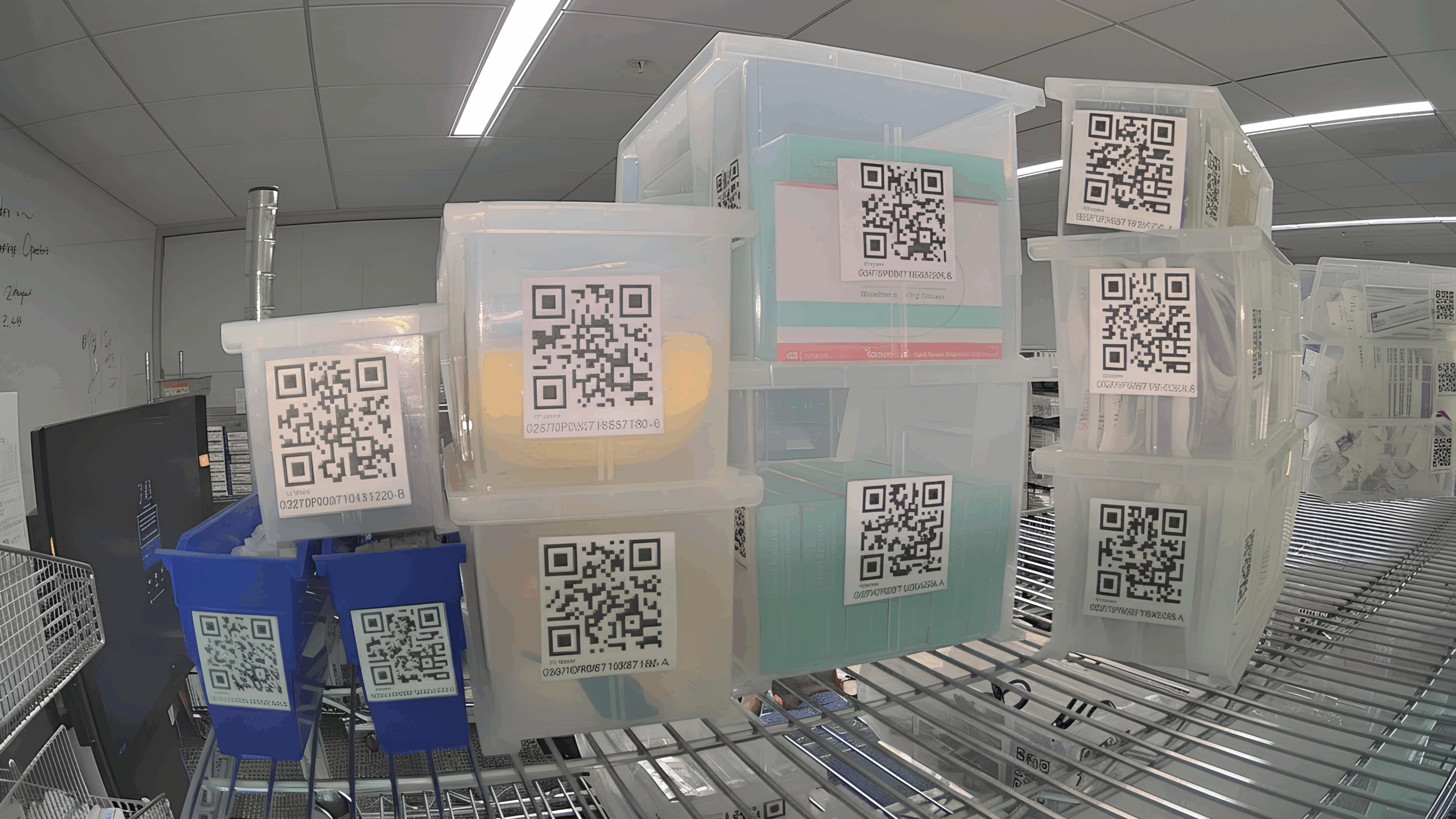
Camera-based computer vision watches supply locations and recognizes what is taken and what remains, with no scanning and no tags. It detects inventory as it moves, updates the count continuously, and feeds the data straight into replenishment so the system creates an order for replenishment without a manual step. Because it does not add a manual step, it fits the OR workflow instead of fighting it. This is the approach behind Chooch hospital inventory management.
How the methods compare
| Method | Capture effort | Accuracy | Best fit | Main limit |
|---|---|---|---|---|
| Barcode scanning | Manual, per item | 80 to 85 percent | Low-cost start | Missed scans, after-the-fact entry |
| RFID and RTLS | Tag plus reader | Higher for tagged items | High-value reusable items | Cost of tagging every disposable |
| Computer vision AI | Automatic, no scanning | 99 percent and above | Continuous OR accuracy | Needs camera coverage of supply areas |
How Computer Vision AI Improves Operating Room Supply Management
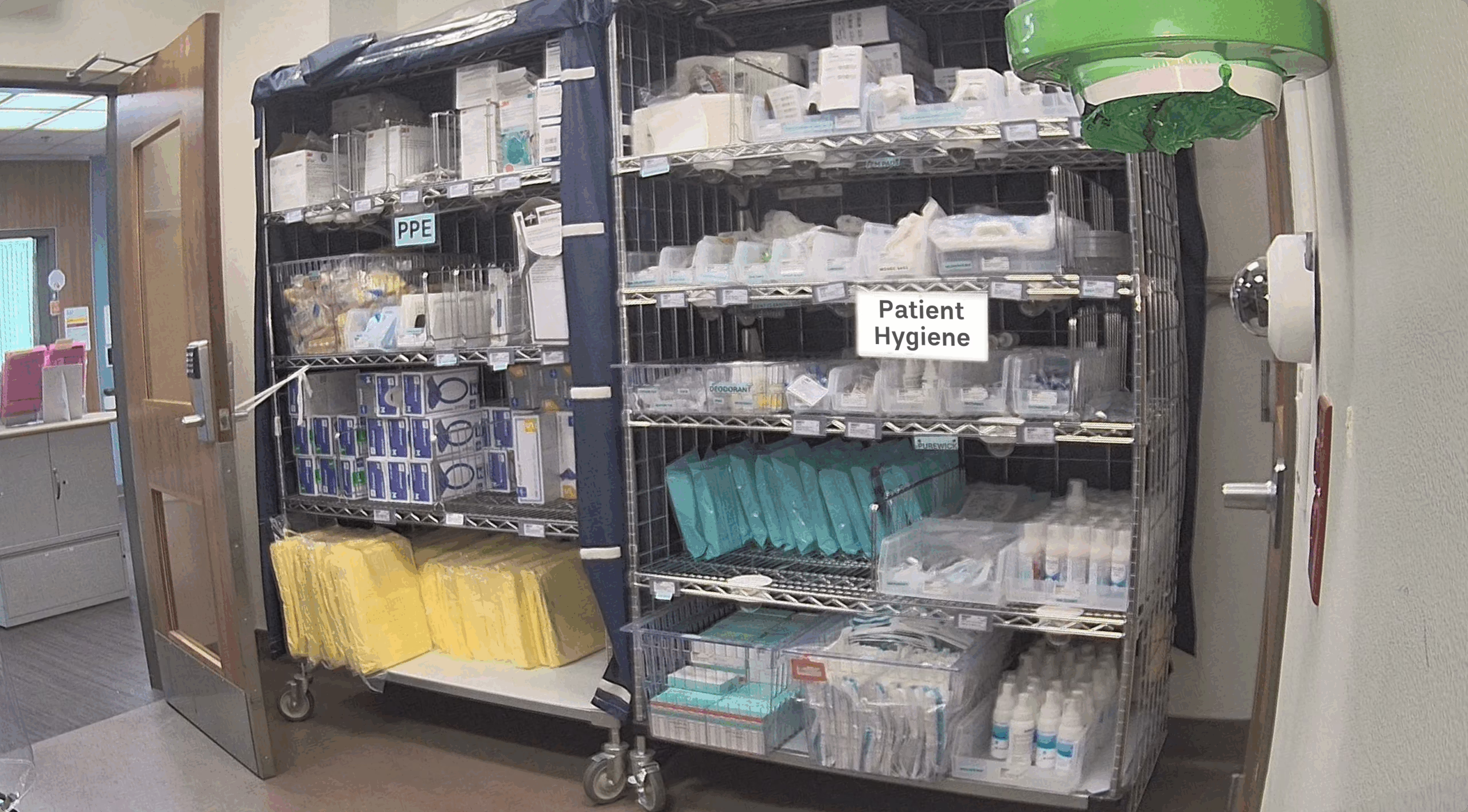
Computer vision AI removes the manual capture step that causes most OR inventory problems. Cameras monitor supply rooms, par locations, and case carts, recognize items as they move, and update on-hand counts in real time. Staff do not scan or count, and the data does not wait for someone to enter it later.
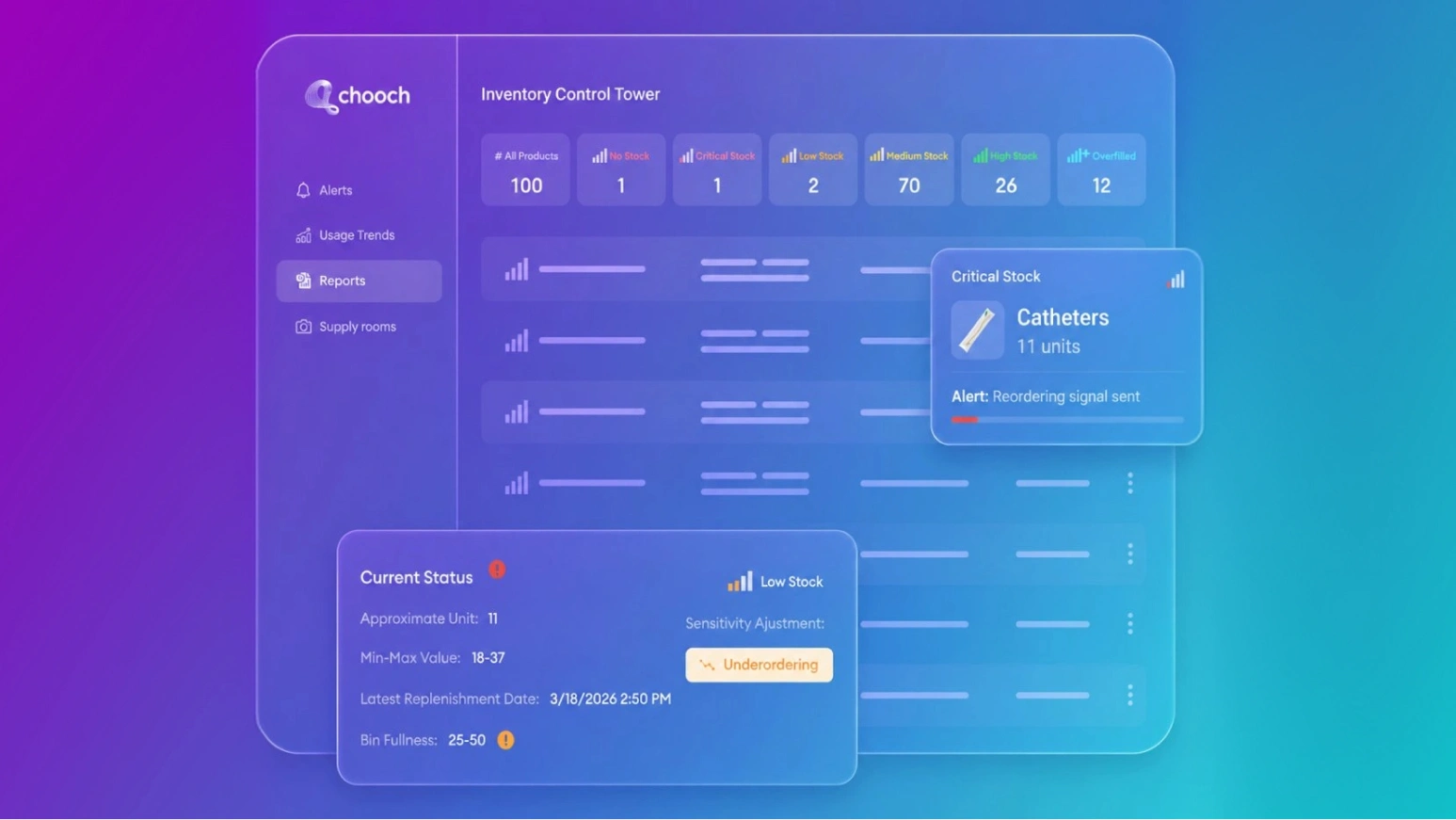
That continuous, accurate count feeds three things at once. It keeps perpetual inventory current so the shelf and the system agree. It supports charge capture by recording what was used against a case. And it gives forecasting clean consumption data, which is what right-sizes PAR levels and triggers replenishment before an item runs short, so the system does not overorder. Hospitals using this approach have reported inventory accuracy above 99 percent compared with 80 to 85 percent under manual methods, forecasting accuracy gains in the range of 25 to 30 percent, and clinical time returned to care as counting and documentation move off the staff.
The point is not the camera. It is that accurate data, captured without adding work, makes every best practice above easier to sustain.
What Results Can Hospitals Expect?
The gains from tightening OR supply management tend to land in a few places. Inventory accuracy rises, which reduces both stockouts and overstock. Waste falls as near-expiry items are used before they lapse and as preference cards stop over-pulling. Emergency and rush orders drop because replenishment runs on real usage. Charge capture improves because usage is recorded against the case. And staff get time back because counting and documentation no longer sit on clinical teams.
Figures vary by hospital and starting point, so treat published numbers as directional and measure against your own baseline. The pattern, though, is consistent: accuracy up, waste down, working capital freed, and staff time returned to patient care.
How to Get Started With Better Operating Room Supply Management?
You do not need to fix everything at once. A practical sequence works well.
First, clean the data you already have. Audit high-volume preference cards and reconcile the item master, including consignment and bill-only items. Second, set PAR levels from real consumption rather than habit. Third, choose how you will capture usage at the point of use, since that decision determines whether the rest holds. Fourth, connect that capture to your ERP so replenishment runs on real data. Finally, measure accuracy, waste, and rush orders against your starting numbers so the improvement is visible.
If you want to see how camera-based capture works in a live stockroom, you can schedule a walkthrough with the Chooch team.
Frequently Asked Questions
Q. What is operating room supply management?
Operating room supply management is the process of tracking, stocking, and replenishing the surgical supplies, instruments, and implants used in the OR so the right items are ready for every case without holding excess stock. It includes preference cards, PAR levels, point-of-use documentation, expiry control, and reordering.
Q. What is the best way to manage operating room inventory?
The strongest approach combines accurate preference cards, right-sized PAR levels, point-of-use capture of what is used, standardized supplies and packs, first-in first-out expiry control, and automated replenishment through the ERP. The capture method matters most, because every other practice depends on an accurate, current count.
Q. What is the difference between perpetual and periodic inventory in the OR?
Periodic inventory counts stock on a fixed schedule and leaves blind spots between counts. Perpetual inventory updates the count every time an item moves, giving continuous visibility. Perpetual is the better fit for high-value OR supplies, provided the hospital can capture every movement without adding manual work.
Q. How does AI help operating room supply management?
Camera-based computer vision AI recognizes supplies as they are taken and replaced, with no scanning or tags. It keeps counts accurate in real time, supports charge capture, and feeds replenishment automatically, which removes the manual step that causes most OR inventory errors.
Q. Why are surgeon preference cards important for OR supply costs?
Preference cards drive what gets pulled for each case. When they are out of date, they over-pull items that get wasted or under-pull items that force a mid-case run. Keeping cards current is one of the fastest ways to cut OR supply waste and improve case readiness.
Bring Accuracy to Every Supply Room
Operating room supply management comes down to one thing: knowing what is on the shelf and what was used, in real time, without pulling staff away from patients. Get the capture right and the rest, from PAR levels to replenishment to charge capture, gets easier.
See how Chooch camera AI keeps OR and hospital supply rooms accurate with no scanning and no counting. Explore hospital inventory management or book a 30-minute walkthrough.