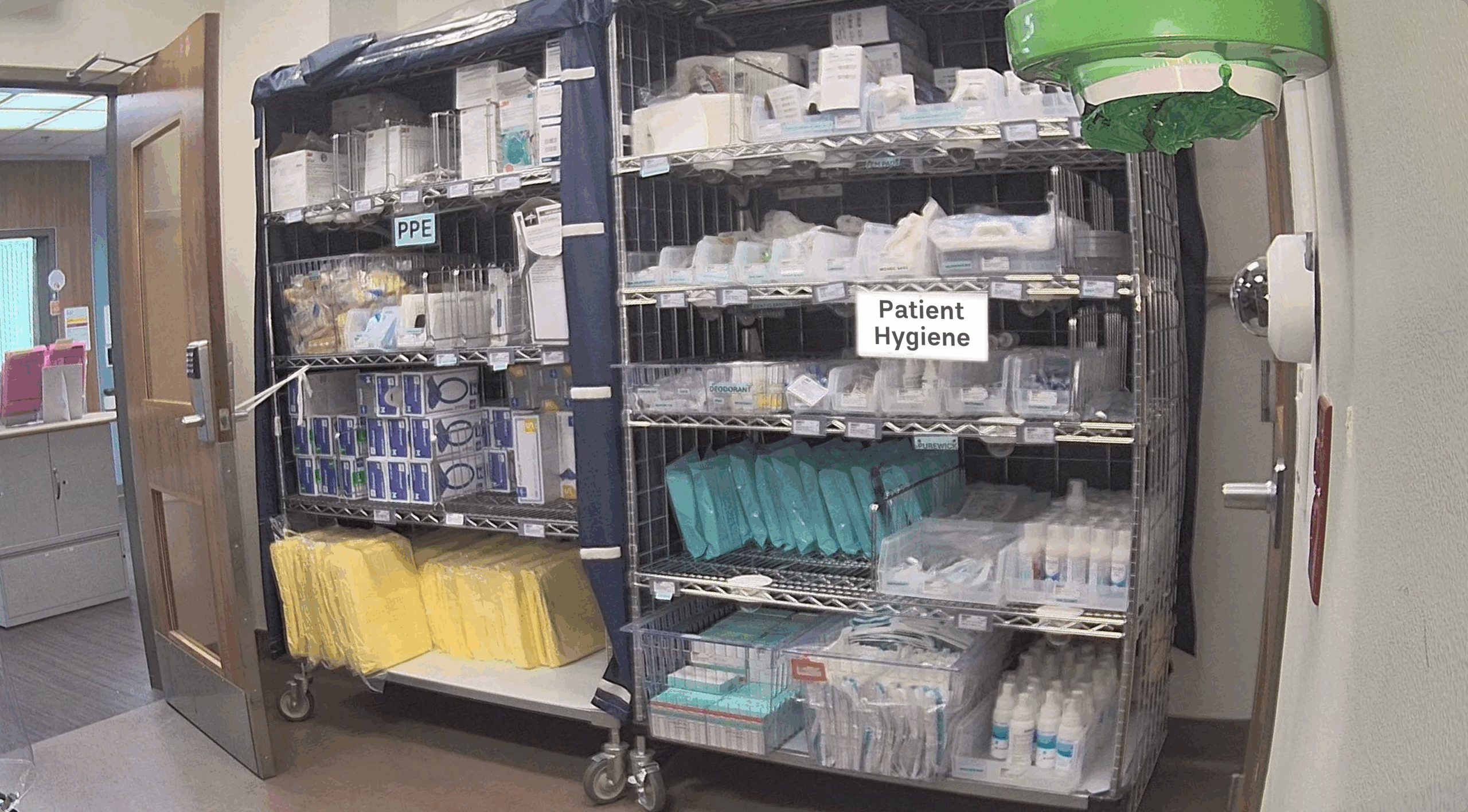

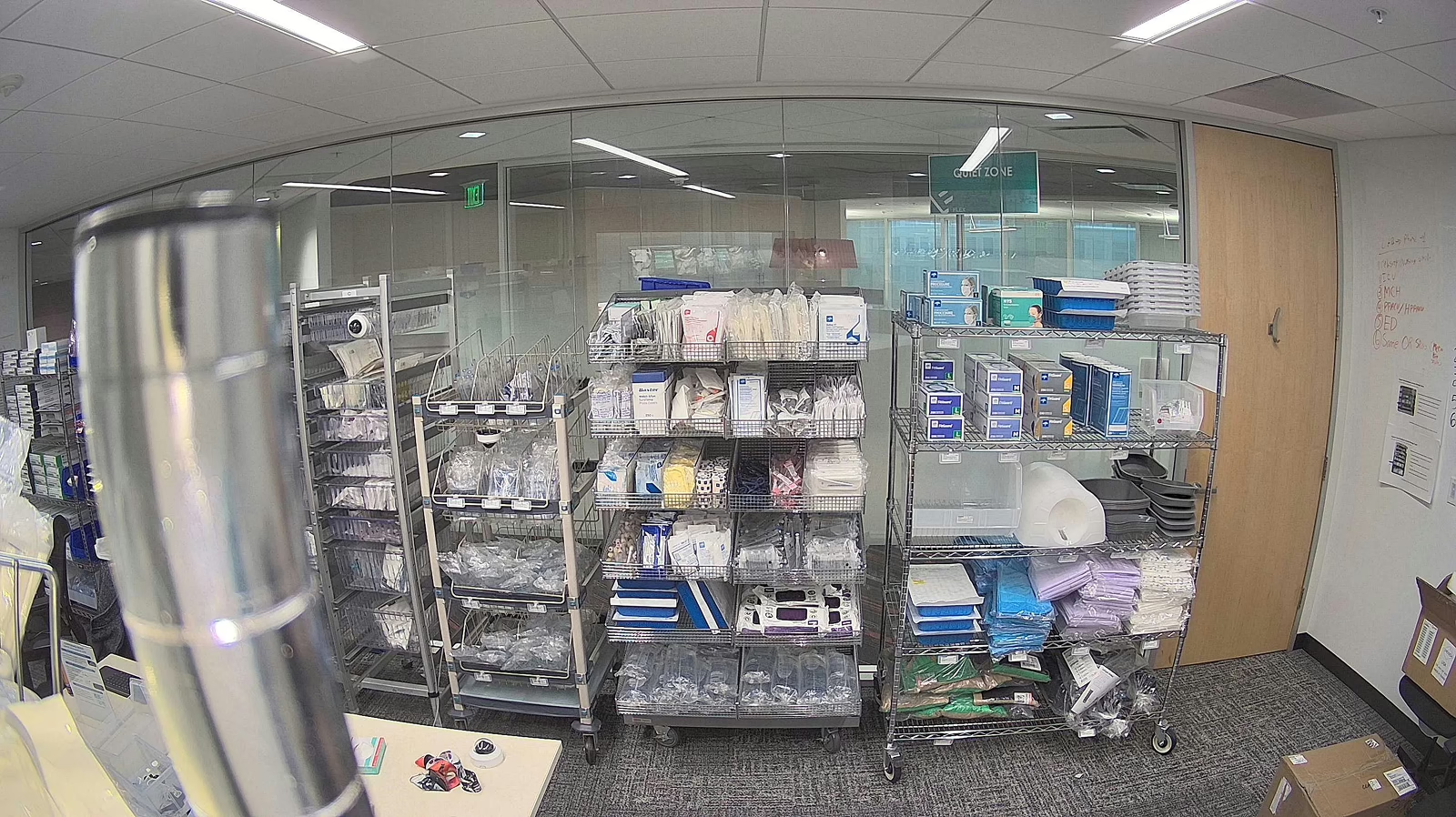
Hospitals move through consumables at a pace that resists simple prediction. IV sets, PPE, dressings, syringes, and everyday supplies rise and fall with patient volume, care patterns, and seasonal pressure. These shifts occur quickly enough to disrupt even well-organized teams. Static PAR levels and historical usage struggle to keep up, which leads to stockouts, waste, and unplanned replenishment that slow care delivery.
Hospitals seeking operational stability now prioritize demand forecasting for hospital inventory. Accurate forecasts give teams visibility into what is coming rather than relying on what already occurred. This shift reduces avoidable shortages, limits over-ordering, and keeps clinical staff focused on patient care instead of supply searches.
Manual counting and static settings remain common, but they no longer support the precision leaders must deliver. Rising supply costs, persistent shortages, and tightening margins require stronger visibility into future demand. CIOs, CSOs, and CTOs now face pressure to strengthen the data foundation that supports supply assurance instead of reacting after disruptions occur.
Demand forecasting for hospital inventory sits at the center of modern hospital operations strategy. It supports reliable inventory levels, reduces waste, strengthens resilience, and advances data-driven operational control.
Demand forecasting in a hospital context
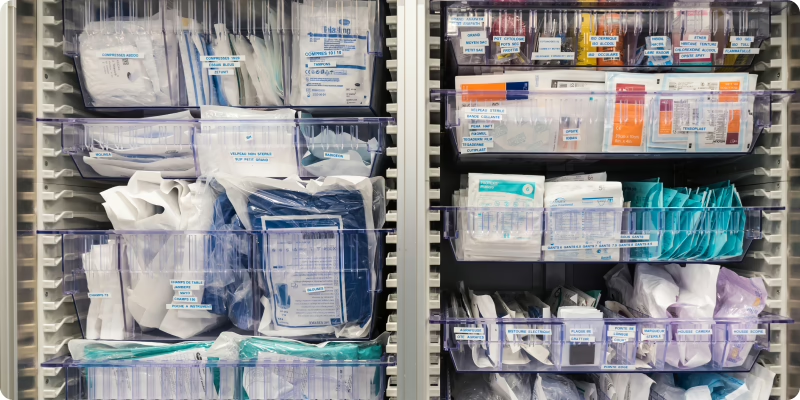
Demand forecasting for hospital inventory predicts future consumable needs based on expected clinical activity rather than assumptions about supply movement. Forecasting relies on procedure schedules, patient volumes, case mix expectations, and historical usage patterns. PAR levels, which stand for Periodic Automatic Replenishment levels, define minimum and maximum quantities for each item to maintain availability without excessive stock.
Consumable usage shifts with procedure volume, inpatient and outpatient trends, and seasonal illness patterns, so forecasting must track these changes precisely. Signals such as scheduling patterns and recent usage help teams understand expected demand across med-surg units, procedural areas, and specialty departments. Forecasting anticipates demand before orders are placed, which reduces waste and limits the need for later corrections.
This clarity matters because consumable demand reflects real clinical activity rather than static logistics assumptions. When forecasts align with care delivery, hospitals improve inventory accuracy and reduce disruption from unexpected shortages or overstock. Point-of-use inventory refers to supplies stored where care occurs, including nursing stations, operating rooms, and emergency departments.
Why traditional methods fall short for consumables
Static PAR levels lock hospitals into outdated usage assumptions. Fixed minimum and maximum levels fail to adjust for procedure volume changes, seasonal spikes, or shifts in patient acuity. Manual counts capture a single moment rather than continuous consumption, which creates delays between actual usage and recorded data. Cycle counts compound this issue by reflecting inventory status only at the time of counting.
Weekly or monthly counts rarely match real-time movement. This timing gap affects replenishment accuracy and creates differences between on-hand quantities and system records. Last month’s usage does not reliably predict next week’s need because care patterns change unpredictably. Elective schedules shift, emergency department volumes surge, and community health trends fluctuate without warning.
Hospitals also manage fragmented data across scheduling systems, ERP platforms, and local inventory tools. Orders and invoices live in one system while procedure calendars live in another. These platforms rarely communicate effectively, which limits forecasting accuracy because the required data remains siloed.
Industry analysis consistently shows that historical usage alone cannot predict future consumable demand when patient mix and procedure volume change rapidly. Hospitals face greater variability than many sectors, which reduces the effectiveness of static replenishment and reactive ordering. These conditions lead to shortages, expired stock, and emergency orders that increase cost and operational strain.
Why better forecasting became critical
Demand forecasting shifted from optional to essential as hospitals faced rising operational risk from reactive replenishment. Ongoing shortages, volatile lead times, and increasing supply costs affect availability and staff workload. Leaders must now anticipate demand earlier to prevent disruptions to patient care.
Seasonal illness spikes, procedure volume shifts, and unpredictable census changes create pressure that traditional methods cannot track in real time. When lead times extend unexpectedly or substitutions emerge, teams need forward visibility to maintain service levels. Discovering shortages after inventory depletes creates delays that hospitals can no longer absorb.
FDA and ASHP reporting continues to document medical product shortages, reinforcing the need for accurate forecasting rather than after-the-fact response. Industry coverage from Becker’s Hospital Review highlights how supply cost pressure and staffing constraints demand more predictable planning. These dynamics require data-driven forecasting to stabilize operations.
How modern forecasting works
Modern forecasting combines multiple data sources to create a dynamic view of future demand. Systems blend consumption data, procedure schedules, patient volume projections, supplier lead times, and seasonality signals. Models update continuously as conditions change rather than relying on static assumptions.
When inpatient volumes rise or clinics add cases, forecasts adjust expected usage. Procedure schedules can signal increased surgical supply demand weeks in advance. Seasonal illness data helps predict respiratory supply needs before peaks occur. This visibility allows teams to adjust proactively instead of reacting to shortages.
Forecast accuracy improves when hospitals capture timely data from . Near-real-time visibility supports models that respond quickly to changes. This stabilizes replenishment cycles, reduces emergency requests, and improves coordination between clinical and supply chain teams.
Benefits that matter to hospital leadership
Stronger forecasting improves financial and operational stability. Accurate predictions reduce shortages that delay procedures and force staff to search for alternatives. Hospitals with reliable forecasts experience fewer stockouts, less waste from expired supplies, and fewer emergency replenishment orders.
Forecasting also supports financial planning by smoothing monthly spending patterns. Finance teams gain more predictable expense projections when consumption estimates reflect future demand rather than past orders. Clinical teams benefit when supplies remain available at the point of use, which reduces delays and improves throughput.
Research consistently shows that improved forecasting reduces avoidable shortages and overordering. Reliable supply availability affects staff satisfaction, patient flow, and the ability to maintain scheduled care without disruption.
What strong forecasting looks like in practice
Effective forecasting relies on accurate data flow, system integration, and shared ownership across supply chain, IT, and clinical operations. Successful programs use SKU-level detail, frequent updates, and integration between scheduling and ERP systems. Teams review forecasts regularly and adjust PAR levels based on validated insight rather than instinct.
Scheduling data and ERP usage patterns help anticipate shifts before service levels suffer. This proactive approach reduces reactive corrections and builds confidence in replenishment decisions. Reliable forecasting depends on systems sharing information rather than operating in isolation.
Guidance from organizations, such as AHRMM, emphasizes demand planning and accurate usage data as core components of resilient inventory strategy. When forecasting becomes routine rather than project-based, hospitals maintain consistent visibility across changing conditions.
Why accurate forecasting depends on automated inventory data
Forecast accuracy depends on data quality and timing. Manual counts introduce delays and inconsistencies that distort on-hand visibility. Skipped bins, inconsistent recording, and delayed updates weaken forecasting inputs.
When data arrives weeks after consumption, forecasts reflect outdated conditions. Models cannot account for shifts that occur between counts. Automated data capture closes this gap by providing continuous visibility into actual supply movement.
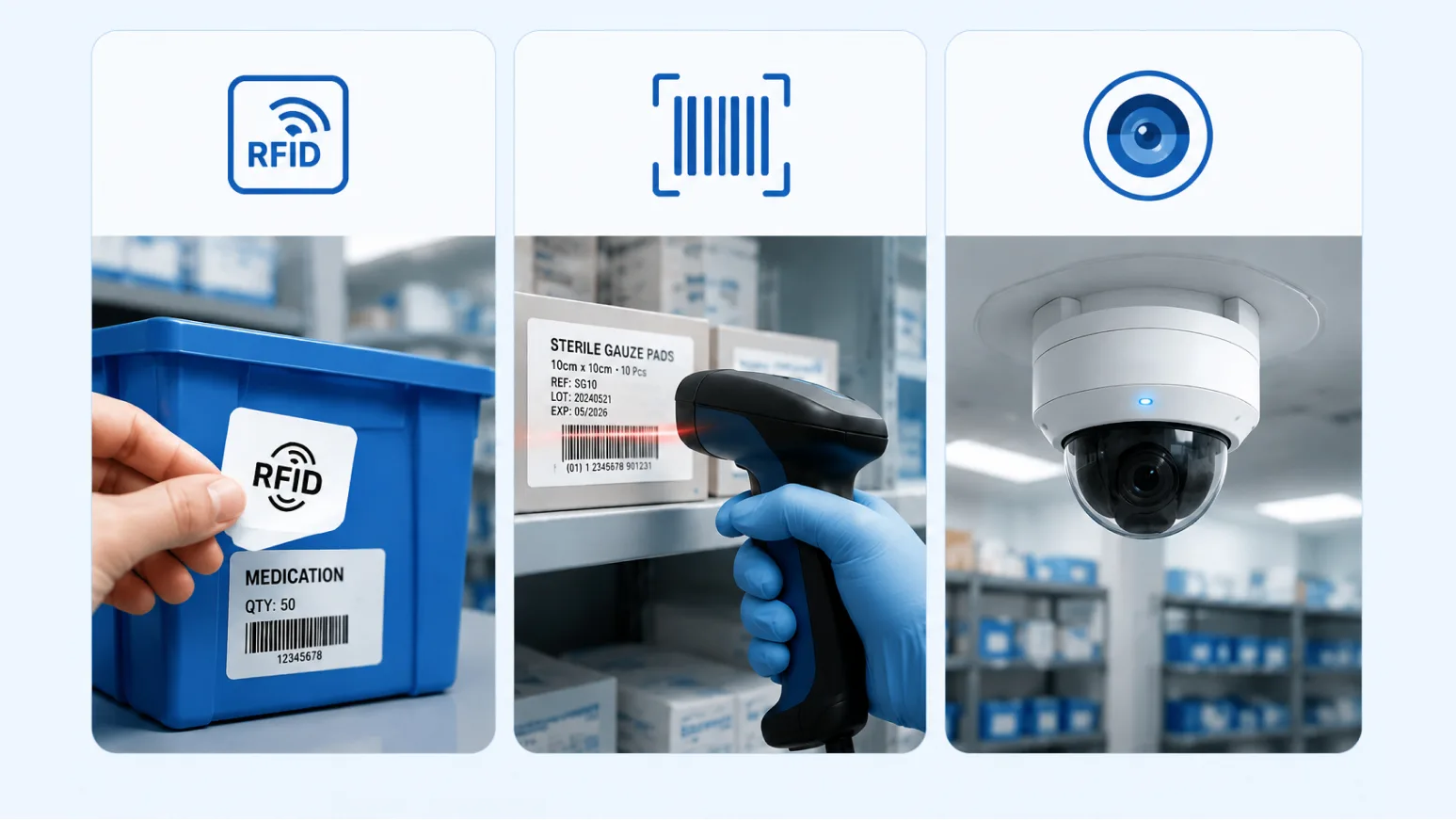
Computer vision systems, weight sensors, and RFID technology capture inventory changes without manual intervention. Near-real-time data strengthens forecasting accuracy and creates a closed loop between visibility, prediction, and replenishment. Forecasting improves as data quality improves.
Next steps for leaders who want to improve forecasting
Leaders can begin by evaluating current data accuracy and identifying consumables with high variability. Reviewing schedule-driven items helps teams focus forecasting where impact is highest. Integration gaps between scheduling, ERP, and inventory tools should be assessed to improve data flow.
Many hospitals pilot forecasting in a single department before expanding. Focused pilots provide evidence of operational impact without broad disruption. As confidence grows and data quality improves, automation strengthens long-term forecasting maturity. The objective is not perfect prediction, but better decisions driven by clearer visibility into future demand.
Schedule a demo with Chooch AI to better understand how accurate point-of-use supply visibility fits into your existing operations.