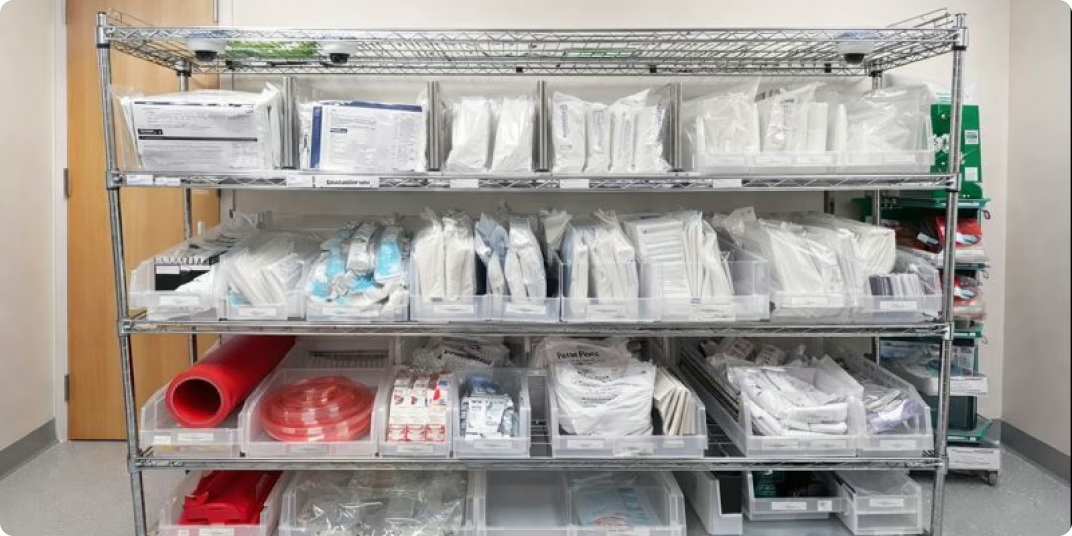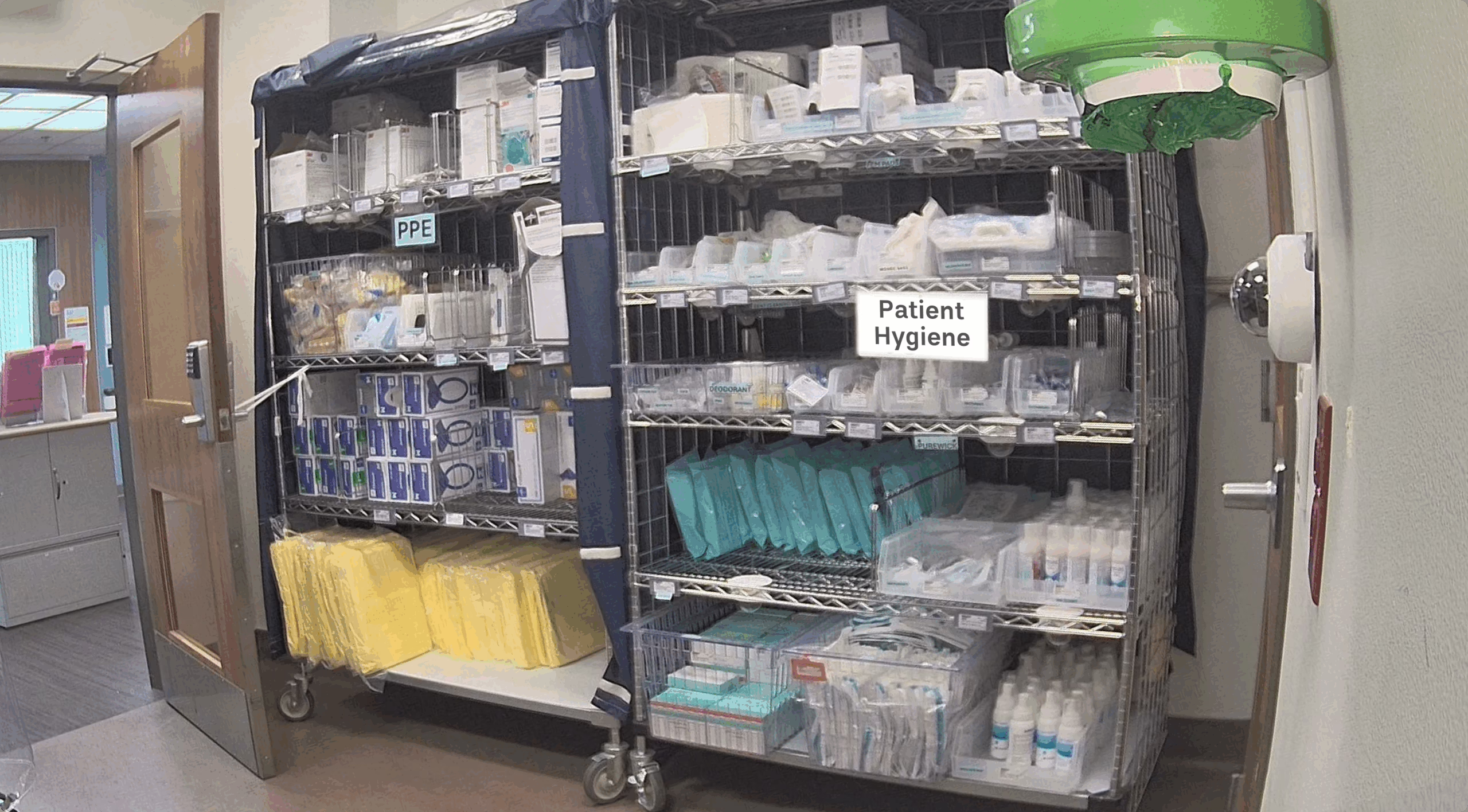

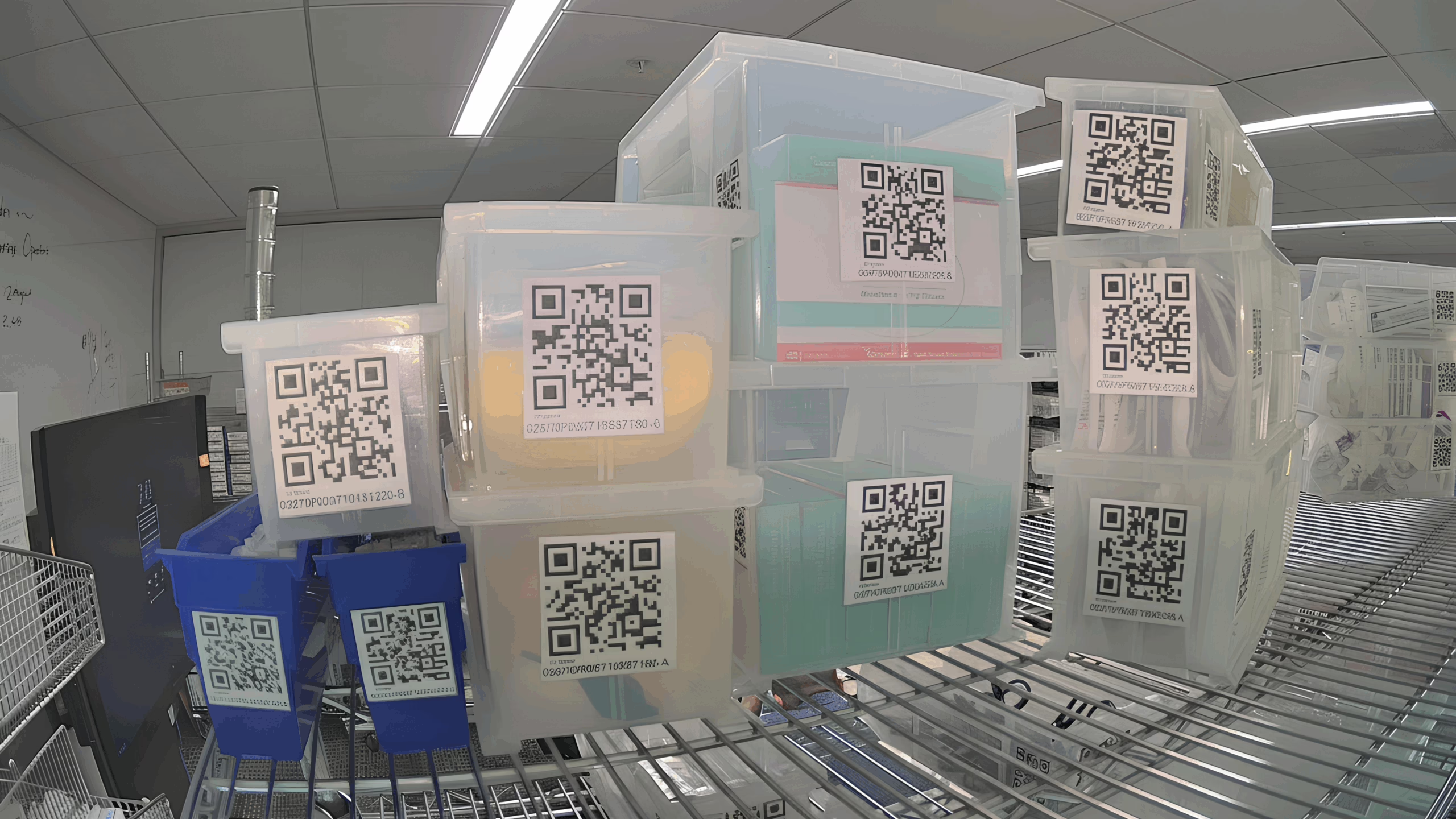
Inventory accuracy at the point of use describes a simple condition. The recorded on-hand quantity matches the physical on-hand quantity at the exact clinical supply location where care delivery occurs. This definition excludes accuracy achieved after reconciliation or retrospective correction. It refers to accuracy the moment a clinician reaches for a supply item and expects it to be there. When staff feel the need to revalidate inventory before use, the system has already failed to provide reliable operational information.
Executives responsible for clinical operations and technology infrastructure understand this dynamic well. Inventory accuracy at the point of use determines whether care teams operate without manual workarounds, emergency orders, or unplanned workflow interruptions. When system records drift away from physical reality in a supply cabinet, cart, or PAR room, clinicians stop trusting the system and begin acting on assumption. The result shows up as delayed procedures, frustrated staff, and financial variance that leadership struggles to govern consistently.
The issue is not whether hospitals value accuracy. It is whether accuracy can be measured and sustained in environments where consumption happens continuously while observation happens intermittently. Most hospital inventory systems still report accuracy as a periodic assessment rather than as a maintained operational state. That structural gap defines the governance problem executives face today.
Why inventory accuracy measurement depends on a reference state
Inventory accuracy measurement requires a defined expected quantity that serves as a baseline for comparison against physical reality. Without a reference state, accuracy cannot be validated because there is no operational definition of what correct inventory looks like. Hospitals cannot measure deviation without first agreeing on a target condition.
That reference state does not come from forecasting or planning logic. It represents the quantity the system assumes exists at a location after a known transaction such as replenishment, adjustment, or confirmed consumption. Inventory accuracy measurement occurs when observed physical conditions are compared against that assumed state. The quality of measurement depends entirely on how reliably and how often that comparison happens.
When organizations rely on periodic cycle counts or manual scanning to establish accuracy, they measure retrospectively rather than continuously. The result reflects what existed the moment of observation, not what exists now. Executives need accuracy that functions as an operational condition because inventory decisions are made throughout the day, not after reconciliation.
How PAR levels in hospitals define expected inventory conditions
PAR levels in hospitals establish minimum and maximum quantities assigned to each point-of-use location based on usage patterns, replenishment cadence, and storage constraints. PAR defines what inventory should look like immediately after replenishment completes. Materials staff restore supply locations to the PAR level during restocking rounds, and inventory systems record that quantity as the expected on-hand balance.
PAR does not verify that replenishment occurred as intended. It defines the assumption the system operates under until another observation or transaction updates the record. When a supply location is restocked to its PAR maximum, the system treats that quantity as reality even if physical conditions do not fully match the expectation.
This creates a clear dependency. Inventory accuracy at the point of use depends on whether the PAR-defined expectation aligns with what physically remains on the shelf after replenishment. Partial fills, misplaced items, or unnoticed discrepancies introduce misalignment immediately while the system continues to report the PAR quantity as accurate. This dependency explains why real time inventory visibility at the point of use becomes critical once PAR defines an assumed inventory state.
The dependency between PAR execution and point-of-use inventory accuracy
Point-of-use inventory accuracy degrades when replenishment execution does not align with the PAR-defined state the system records as correct. Partial replenishment creates immediate divergence because the system assumes full restoration while physical inventory reflects otherwise. Delayed completion or unnoticed discrepancies have the same effect.
Hospitals manage thousands of SKUs across many supply locations, each with distinct PAR structures and replenishment frequencies. Some areas require multiple restocking cycles per day, while others follow weekly patterns. Every replenishment event establishes a new assumed state. Every consumption event moves physical inventory away from that state.
The challenge is not incorrect PAR definition. The challenge is that execution fidelity between replenishment events cannot be verified without sustained observation. Periodic checks validate accuracy only at discrete moments while inventory conditions continue to change between those moments. This execution gap becomes more pronounced as organizations scale, which is why PAR room automation in hospitals increasingly focuses on reducing variability between replenishment intent and physical outcome.
Walk through a single-bin example step-by-step
Consider a hospital supply cabinet containing a high-turnover suture used in surgical services. The organization defines a PAR minimum of 12 units and a PAR maximum of 24 units based on observed usage and replenishment cadence.
During routine morning rounds, materials staff restock the bin from 8 units to the PAR maximum of 24 units, rotating stock according to standard handling practice. The inventory system records 24 units as the on-hand quantity.
Clinical activity begins immediately. Surgical cases consume units throughout the day. Physical inventory declines, but the system continues to reflect the last confirmed PAR state because no transaction updates the record.
When usage reaches the PAR trigger condition, staff receive a replenishment signal consistent with the established workflow. The bin is restocked back to the PAR level. At this point, inventory accuracy at the point of use depends on whether the recorded quantity matches what physically sits in the bin after restocking.
If replenishment restores fewer units than recorded, the system reports accuracy while physical conditions do not match. That discrepancy persists through subsequent use until another observation event occurs. The longer the interval between replenishment, observation, and use, the less reliable inventory accuracy measurement becomes.
Where inventory accuracy at the point of use begins to drift
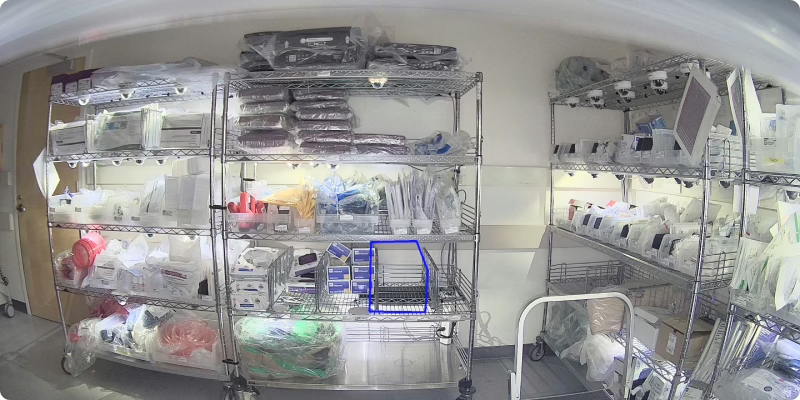
Drift occurs when the PAR-defined expected state and the physical state diverge during blind time between observation events. Consumption reduces physical inventory continuously while the system maintains the last recorded quantity. Drift does not originate from poor PAR design. It originates from the absence of sustained awareness while inventory conditions change.
Hospitals that validate point-of-use inventory through weekly or monthly cycle counts often measure conditions that no longer reflect current reality. By the time discrepancies surface, clinical teams have already adapted through substitution or emergency ordering. Accuracy becomes a reporting metric rather than a governance control.
Why periodic verification limits inventory accuracy measurement
Periodic verification captures inventory conditions at isolated points rather than across continuous use. Each cycle count confirms what exists at that moment but provides no insight into what occurred between observations. Measurement fidelity declines as the time between observations increases.
Even disciplined counting programs cannot maintain point-of-use inventory accuracy when validation remains episodic. Blind time persists regardless of procedural rigor, allowing discrepancies to accumulate undetected. Retrospective correction does not eliminate the interval where accuracy was already lost.
How continuous observation stabilizes inventory accuracy at the point of use
Continuous observation refers to sustained awareness of physical inventory conditions rather than scheduled confirmation. When observation persists throughout consumption and replenishment cycles, recorded quantities stay aligned with physical reality rather than periodically corrected.
Continuous observation does not replace PAR structures or replenishment workflows. It preserves the existing governance model while eliminating blind time that allows drift to develop. Inventory accuracy measurement reflects current conditions rather than historical snapshots.
The operational relationship between PAR levels and inventory accuracy
PAR levels in hospitals define the expected inventory state following replenishment. Inventory accuracy at the point of use evaluates whether physical conditions align with that expectation. Inventory accuracy measurement quantifies how divergence accumulates over time.
When managed through periodic verification, accuracy remains retrospective. When managed through continuous observation, accuracy functions as a maintained operational condition. Clinical operations depend on trust in recorded quantities. Once that trust erodes, manual verification replaces system reliance and undermines the intent of PAR-based inventory control. A deeper examination of breakdown patterns explains why PAR levels fail to maintain hospital inventory accuracy even when thresholds appear correctly defined.
How continuous observation supports inventory accuracy at the point of use
Chooch AI supports hospitals and healthcare systems to improve inventory accuracy at the point of use. By continuously monitoring physical inventory usage, Chooch autonomous AI healthcare inventory management observes conditions against PAR-defined expectations and surfaces divergence without relying on periodic counts. Reducing blind time between replenishment and consumption helps alignment persist throughout daily operations. Human oversight shifts toward response rather than delayed detection.