

Hospitals are migrating from manual to AI healthcare inventory control to avert shortages, reduce waste, and free staff time. What a leader wants is some way to know what went where, when, and what needs to move next. Camera-based sensing and analytics make supply rooms intelligent, pass indication through to purchase, and keep the shelves ready without any extra steps. The result is maintained availability with less increased work for already stretched teams.
1) From reactive counts to predictive restocking
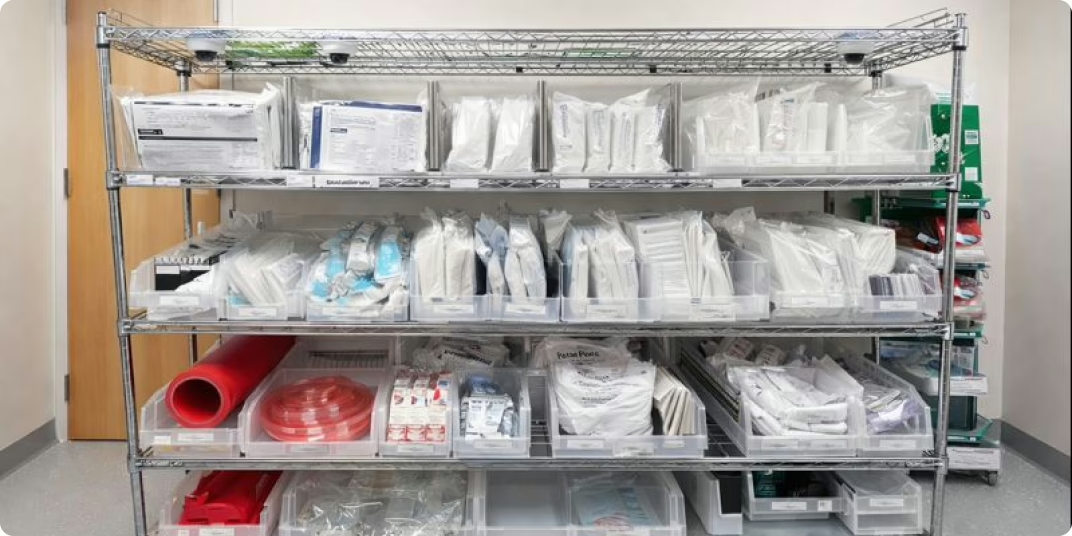
Manual counts and static PARs cause late orders and overfills. Predictive restocking uses historical consumption, lead times, and seasonality to set dynamic reorder points that respond to reality, not guesswork. Rooms do not need new cabinets or tagged items; smart cameras observe bins, recognize items and counts, and translate depletion into demand signals.
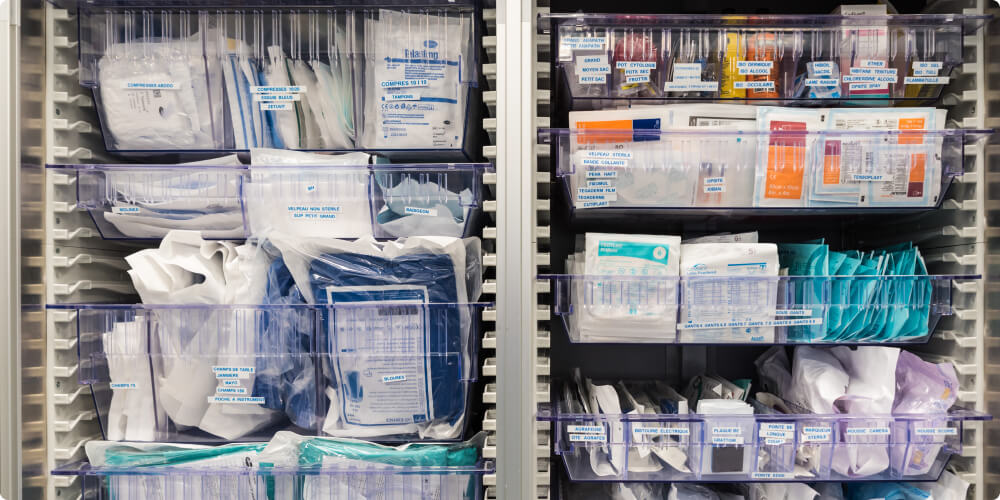
Right-sizing follows. Teams reduce empty bins and overfill bands over time, then hold stock in the 50–100% range that supports clinical flow. Leaders get fewer emergency orders and fewer expirations, with a clear audit trail for every adjustment. Financial impact grows as carrying costs decline and rush fees fade. Becker’s Hospital Review estimates U.S. hospitals could save about $25.4B each year by improving supply chain practices, which shows the scale of value when small process improvements compound.
2) AI healthcare inventory management removes blind spots
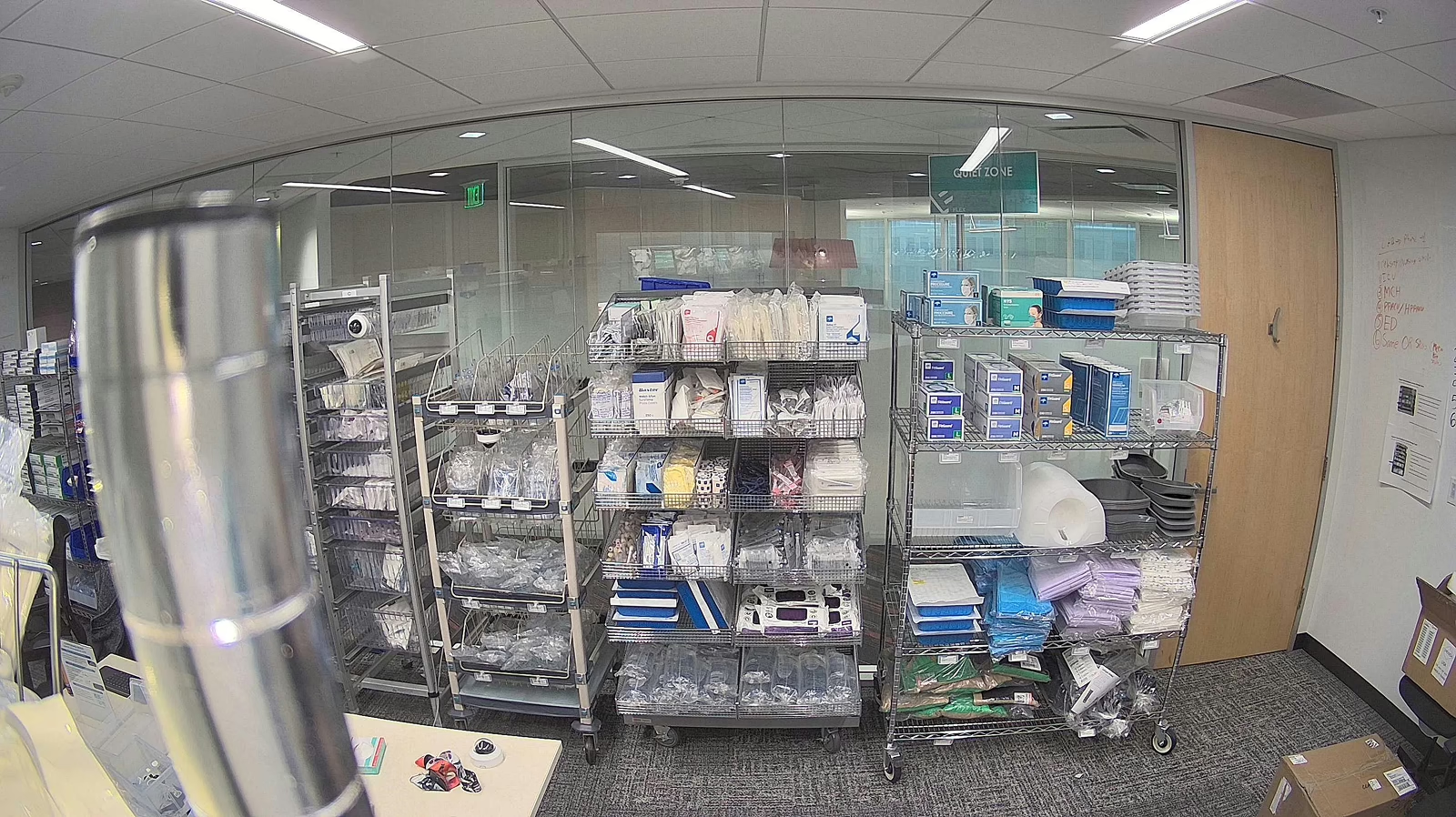
The most common pain is knowing what is on the shelf right now across multiple closets. Vision models monitor shelves continuously and update the system as items move. That closes gaps that barcode sweeps miss and gives inventory visibility across locations, products, and shifts.
Standard tools still matter; the difference is accuracy and timeliness. When leaders compare technology paths, understanding how legacy scanning fits with AI-powered smart cameras helps set policy and budgets. Policy and budgets improve when leaders compare barcode and RFID with computer vision in hospital supply rooms.
With continuous signals, supply rooms stop being black boxes. Inventory visibility improves cycle counts, expiration control, and charge capture. Nurse teams spend less time searching, and supply chain teams stop debating whether an item was stocked; they review images, timestamps, and system status instead. AHRMM’s guidance on supply chain excellence reinforces the importance of standard measures for cost, quality, and outcomes, which become easier to achieve when shelf status is always current.
3) Automate the work without changing workflows
The best automation fits the way clinicians already work. Cameras mount to existing racks and carts, then the system watches, learns, and orders. This is hospital inventory automation without badge taps or barcode rituals. Staff open the door, take the item, and move on. The AI records the change and queues a reorder if needed.
The experience is touchless inventory in daily use. If a nurse needs help, the system can answer where an item is stocked on another floor and even light an indicator to guide retrieval. Privacy is protected with automated masking and frame handling aligned to HIPAA expectations. Policy and staffing align faster when teams adopt zero-touch supply management. Small steps reduce friction. Start in the closets that drive the most complaints or spend, then expand as accuracy and adoption prove out. When the workflow does not change for clinicians, adoption rises and alerts do not get ignored. Reliability grows as the system learns local patterns of restock timing, shift changes, and vendor delivery windows.
4) Turn supply data into decisions
Once rooms stream data, leaders can act on trends, not anecdotes. A control-tower view shows stock bands by rack, hour-by-hour consumption, and which SKUs are chronically low or chronically overfilled. Finance gets spend analytics by unit and by item. Sourcing teams see which contracts run hot or cold. Clinical leaders see which rooms draw from others and when.
This is where hospital inventory automation meets governance. Rules flag any SKU that remains low after replenishment, which signals the need to adjust min-max settings. Reports reveal dormant stock that has not moved in months. With predictive restocking in place, forecasts blend seasonality, vendor performance, and procedure schedules to smooth orders week to week. Recent McKinsey analysis estimates that spend optimization programs can cut external spend by 5 to 15%, especially when clinicians engage and data drives product standardization.
Operational results you can measure
Outcomes compound when accuracy, speed, and accountability rise together. Waste falls when expired or duplicate stock is visible and addressed. Stockouts decline as reorder points adjust to true consumption. Clinicians get time back for patient care, not counting and searching. Finance sees steadier turns and fewer rush fees. Sourcing negotiates from evidence, not opinion. With clean signals, AI healthcare inventory management becomes a lever for performance, not a reporting chore. Teams move from firefighting to strategy as they make progress toward strategic supply performance.
What leaders should do next
Set objectives first. Define targets for fewer emergency orders, lower expirations, and time returned to clinical staff. Start with the closets that drive the most complaints or spend. Validate privacy and integration requirements early, then phase in additional rooms as accuracy and adoption prove out. Tie reviews to a monthly control-tower cadence so changes to min-max settings and supplier rules do not drift. This is how touchless inventory becomes standard practice, and how programs scale across sites without surprises.
Want shelves ready without constant rescans and spot checks? See how camera-based signals, automated ordering, and clear analytics make AI healthcare inventory management practical in existing rooms. Schedule a consultation to map the approach to your hospital facilities.