
Hospitals face another year of margin pressure, unpredictable demand, and tighter staffing. Digital transformation built the foundation, but visibility alone cannot close the speed and accuracy gaps in inventory management. The next phase is automation driven by AI that acts as fast as the work itself. Across healthcare supply chains, six trends define where operations are heading and how AI automation is taking hold.
1. From digital systems to intelligent operations
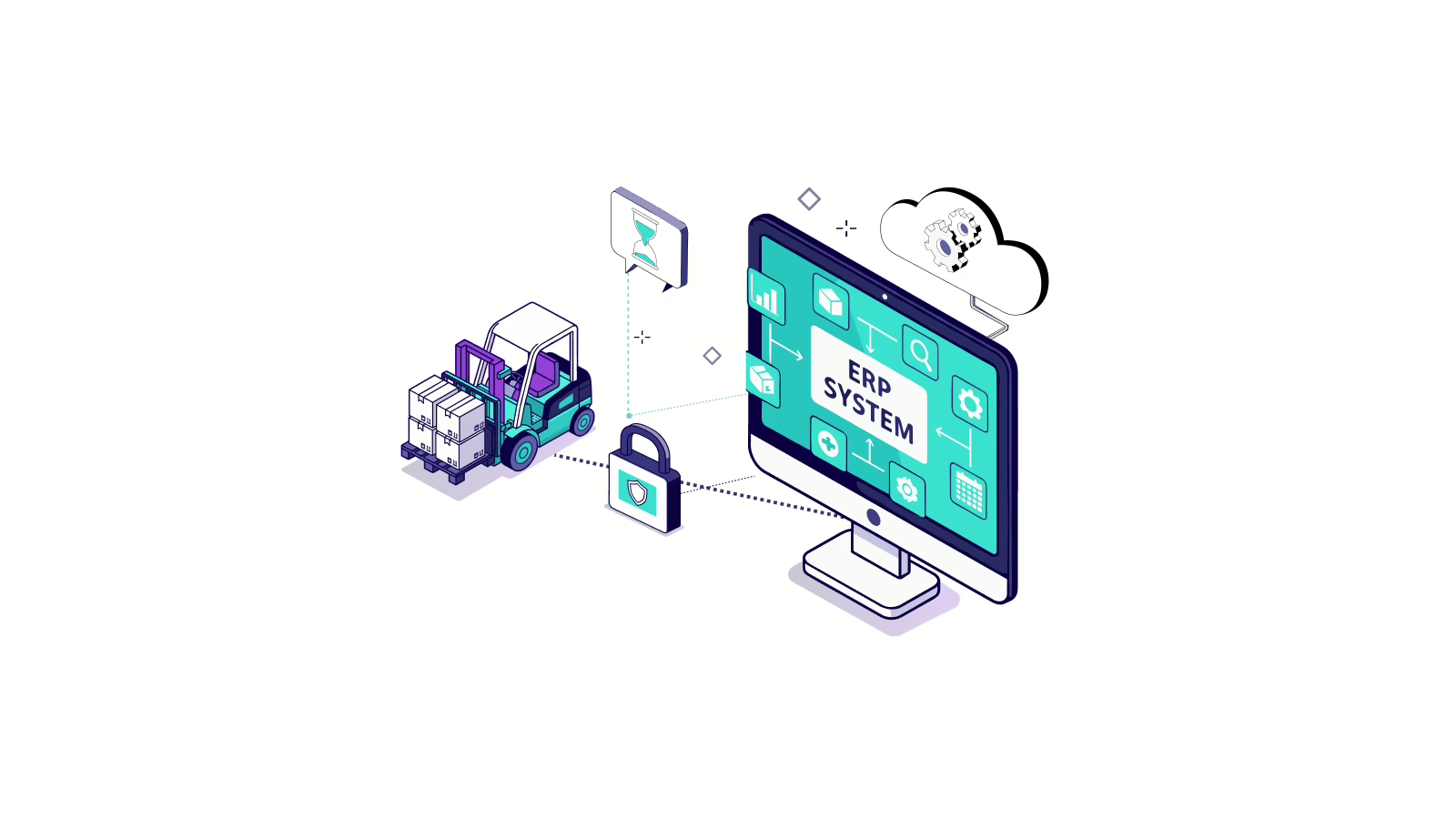
The first wave of supply chain modernization digitized hospital operations. ERPs and materials management systems brought purchasing and tracking online, giving teams reliable records of what was ordered, received, and billed. That structure improved data accuracy and visibility across sites. It helped hospitals replace fragmented manual processes with coordinated data flow. Yet these systems still depend on human input. Delayed updates limit the ability to prevent problems before they occur.
Hospitals now need to focus on the next phase. Digital systems record what happens but don’t always prevent what happens next. Staff still enter counts manually and react to shortages after they start. Reports confirm issues instead of getting ahead of them. Leaders need agentic tools that act in the moment rather than describe what went wrong.
AI automation bridges that gap by turning static data into action. It reads usage in real time, predicts when supplies will drop, and triggers replenishment automatically. These systems use the data hospitals already collect and maintain steady operations without adding manual work for staff. The shift from record-keeping to intelligent action defines the next stage of supply chain modernization.
Why it matters: Digitization created visibility. AI automation uses it to make operations responsive and predictive.
Takeaway: Hospitals built the digital foundation. AI automation turns it into control.
2. AI automation moves from pilot to practice
Hospitals are moving from testing AI automation to using it daily. The change is happening faster than expected because the barriers that once slowed adoption are falling and results now appear quickly. Pilots demonstrate measurable impact in weeks, showing fewer stockouts, steadier supply levels, and less manual work. Executives see reliable performance and decide to expand immediately rather than continue testing.
Several forces fuel this acceleration. Cloud-based ERPs provide cleaner data, and automation connects through standard APIs instead of complex custom integrations. Security reviews move faster because modern platforms meet enterprise requirements like HITRUST, SOC 2, and full audit logging. Leaner staffing also pushes leaders to turn short-term pilot gains into permanent operational efficiency, eliminating repetitive tasks that can no longer be sustained manually.
AI automation benefits from this readiness across both data and infrastructure. It tracks inventory movement in real time, updates counts automatically, and signals replenishment as levels change. It connects securely to existing systems and turns information into continuous action without adding complexity. The combination of quick proof, lower risk, and measurable return is moving projects from pilot to production faster than any previous technology cycle.
Why it matters: Hospitals no longer need to test whether AI automation works. They need to scale it. Proof and trust are driving full adoption.
Takeaway: Pilots built confidence. Production turns AI automation into the new standard for supply operations.
3. The demand for full visibility
Visibility once meant knowing what was ordered and delivered, but in 2026 it means knowing what is on the shelf right now. Hospitals need a live view of supply levels across every department, not a report at the end of the week. The demand grows as disruptions continue and staff resources tighten. Operations cannot afford to discover shortages or waste after they occur, so visibility must extend to every shelf and bin.
Traditional dashboards and ERP reports are delayed and incomplete. They show what has been received, not what is being used, leaving blind spots between storerooms and point-of-care areas. That lag forces teams into reactive work and drives unnecessary spending to recover from stockouts. Hospitals need visibility that moves at the same pace as supply consumption.
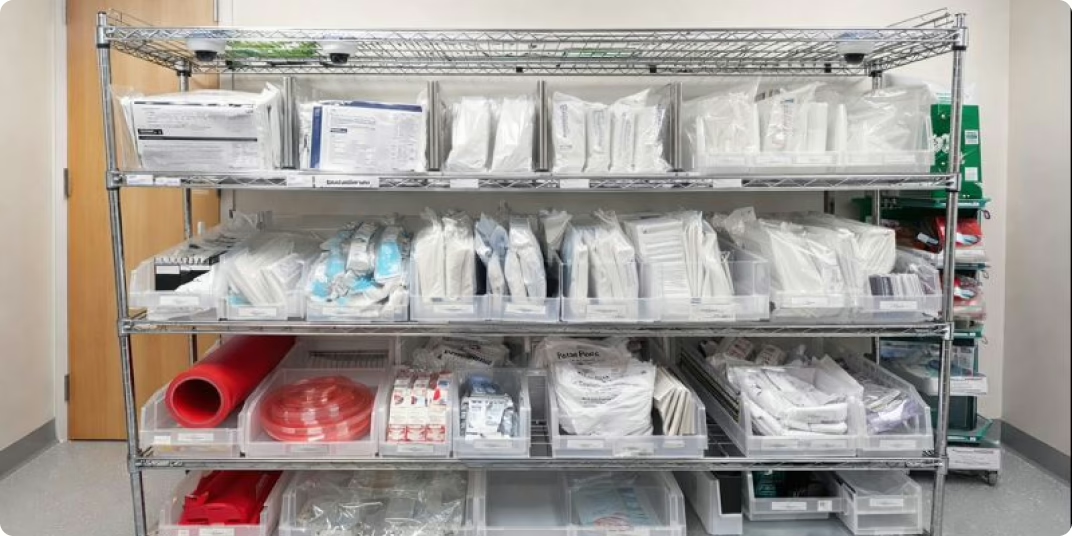
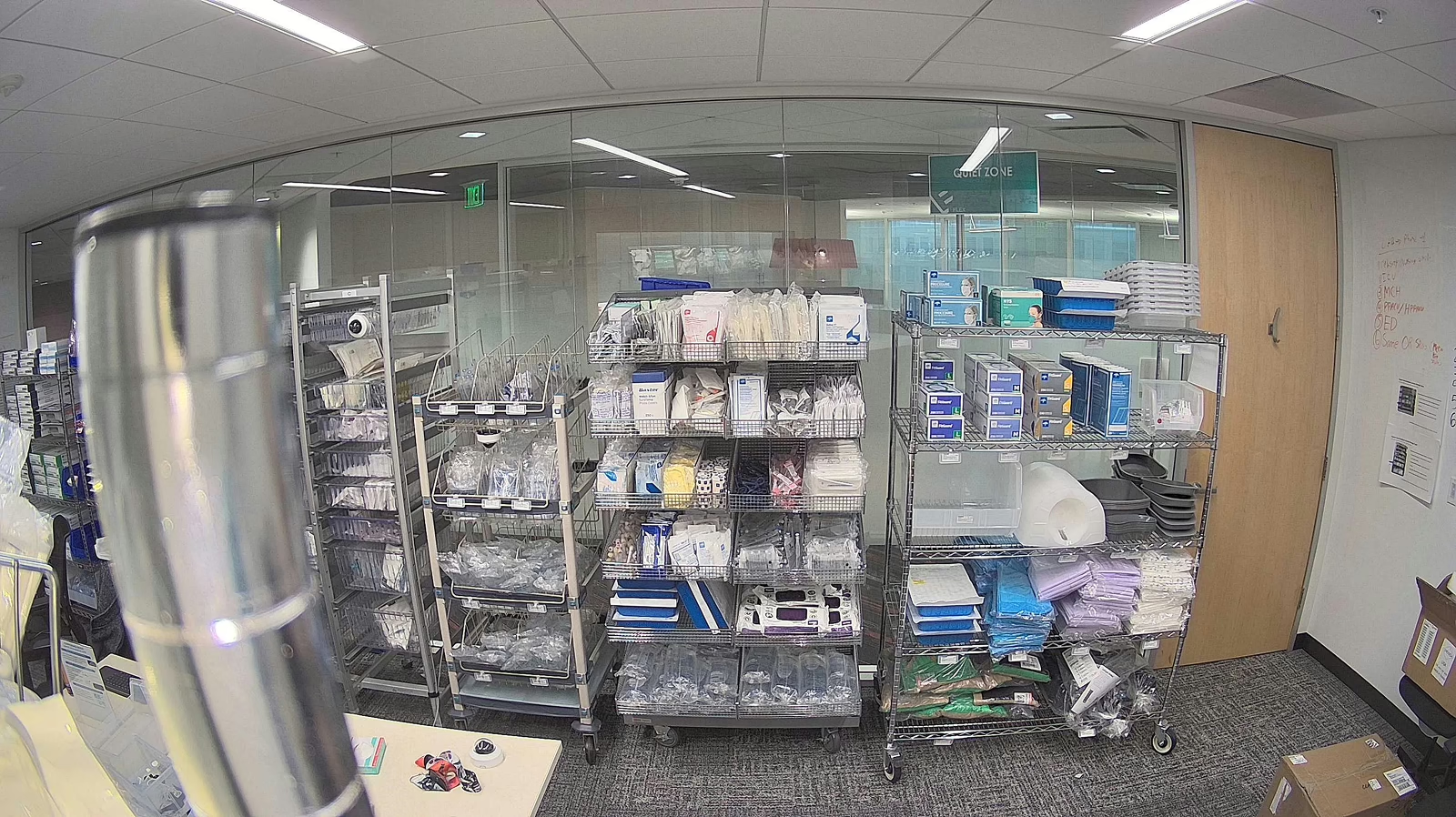
AI automation closes those gaps. Camera-based systems monitor shelves continuously and feed live data back into supply dashboards. Managers track usage and restock events as they happen, gaining an accurate view of supply status across all locations. That insight gives hospitals continuous control instead of delayed reaction, enabling teams to rebalance stock, reroute supplies, and adjust reorder timing in real time while maintaining operations without interruption.
Why it matters: Visibility without speed is noise. Real-time AI automation turns it into control.
Takeaway: Hospitals can finally see inventory as it moves, not after it is gone.
4. Building stronger, more resilient supply chains
Disruption is now a permanent condition in healthcare logistics. Shipping delays, vendor consolidation, and unpredictable demand make it difficult to maintain steady inventory. Hospitals cannot rely on fixed ordering schedules or safety stock alone, and each day spent reacting increases cost and risk. Resilience has shifted from stockpiling materials to creating systems that adapt automatically to change.
AI automation enables that adaptability. It monitors supplier delivery trends, usage rates, and consumption data together, recalibrating reorder timing when patterns shift. When shipments slow or usage spikes, the system adjusts automatically to keep stock levels balanced. Supply teams move from reacting after the fact to managing exceptions before they create disruption.
Automation also allows hospitals to replace excess with intelligence. Instead of holding more inventory, operations stay ready through constant synchronization between shelf activity and supplier orders. This agility strengthens resilience while reducing waste and cost across the network.
Why it matters: Resilience no longer means excess. It means readiness. AI automation keeps supply chains stable under pressure.
Takeaway: Hospitals that react instantly recover faster and spend less.
5. Cost pressure and efficiency
Cost control remains the top operational priority for supply chain leaders. Supply expenses continue to rise faster than reimbursements, and manual processes still consume staff time and create waste. This alignment is one of the biggest advantages highlighted in our analysis of how AI-powered inventory systems reduce costs. Unplanned freight, overstock, and expiration loss quietly erode margins even in well-run hospitals. Leaders are seeking stability that goes beyond budget adjustments and process checklists.
AI automation creates that stability by matching supply to demand continuously. It reads usage patterns, prevents overfilling, and eliminates last-minute replenishment that drives premium freight costs. Inventory stays balanced, and spending aligns with actual utilization instead of forecasts. Finance teams gain predictable expense patterns they can model and manage with confidence.
Operational efficiency follows naturally. With AI automation managing routine tasks, supply staff focus on improvement and forecasting rather than recovery work. Efficiency becomes a system function, not a project.
Why it matters: Predictable cost follows predictable supply. AI automation delivers both.
Takeaway: Efficiency is no longer a project. It is a by-product of automation.
6. Sustainability becomes measurable
Sustainability targets now reach deep into the supply chain. Hospitals must report waste, emissions, and resource use as part of ESG and compliance commitments, but manual tracking cannot meet those expectations. Data gaps create uncertainty and miss reporting risks financial penalties or reputation loss. Sustainable operations now depend on measurable precision.
AI automation provides that precision. This precision also helps reduce waste and expiration risk, another indicator that supply chains benefit from automation. It maintains inventory at the right levels, reducing expired stock and unnecessary freight. Every automated reorder cuts packaging waste and lowers transport emissions. The same data that drives supply accuracy also feeds ESG reports automatically, replacing manual estimates with verified numbers.
By linking efficiency with environmental responsibility, hospitals meet compliance goals while improving performance. The shift to measurable sustainability demonstrates that smarter operations and responsible resource use can move together.
Why it matters: Reducing waste improves both financial and environmental outcomes.
Takeaway: Balanced supply is sustainable supply, and AI automation keeps it that way.
Bringing the trends together
Digitization built the foundation, and AI automation brings it to life. Hospitals now have the data, systems, and confidence to let technology handle what was once manual. Real-time visibility, proactive response, and stable cost performance are becoming standard expectations, not future goals. As hospitals evaluate the shift to autonomy, it’s important to clarify the most common misconceptions about AI-powered inventory management. 2026 marks the point where hospitals move from managing inventory to mastering it.
Why inventory automation sits at the center of every 2026 supply chain trend
Every major shift in 2026 leads to one conclusion. Inventory automation has become the center of operational control for hospitals. It connects data, decisions, and execution in one continuous system that keeps supplies aligned with care demands. Hospitals gain precision and speed that manual work cannot match.
- Digital transformation builds the data base. Cloud ERPs and materials systems supply the accurate inputs that automation uses.
- AI automation drives execution. Machine intelligence manages replenishment in real time and makes faster, more consistent decisions.
- Visibility turns into foresight. Continuous tracking predicts usage instead of reporting it after the fact.
- Resilience replaces reaction. Automation spots disruption early and adjusts supply plans before it affects care.
- Cost efficiency becomes system behavior. Balanced inventory reduces waste, freight, and emergency orders.
- Sustainability becomes measurable. Right-sized stock lowers expiration, packaging, and transport impact.
These forces work together to create a self-improving cycle of data and action. Inventory stays in sync with demand, supply teams focus on improvement, and leaders gain confidence in performance they can measure. Hospitals that move first toward autonomous inventory management will set the new standard for operational excellence.
Hospitals already using autonomous inventory management see the results. Faster replenishment, fewer stockouts, and predictable performance. operations. AI automation turns visibility into action and gives hospitals control they can trust. Schedule a consultation to see how Chooch autonomous AI will transform your hospital’s supply chain performance.