
Hospital inventory automation is not one big switch. It is a progression from periodic counting to continuous visibility and smarter replenishment.
Most hospitals do not move from spreadsheets and cycle counts to autonomous inventory overnight. The practical path is simpler: first understand what is actually on the shelf, then reduce manual work, respond to exceptions faster, and use better consumption data to improve replenishment.
Stage 1: Manual Counts
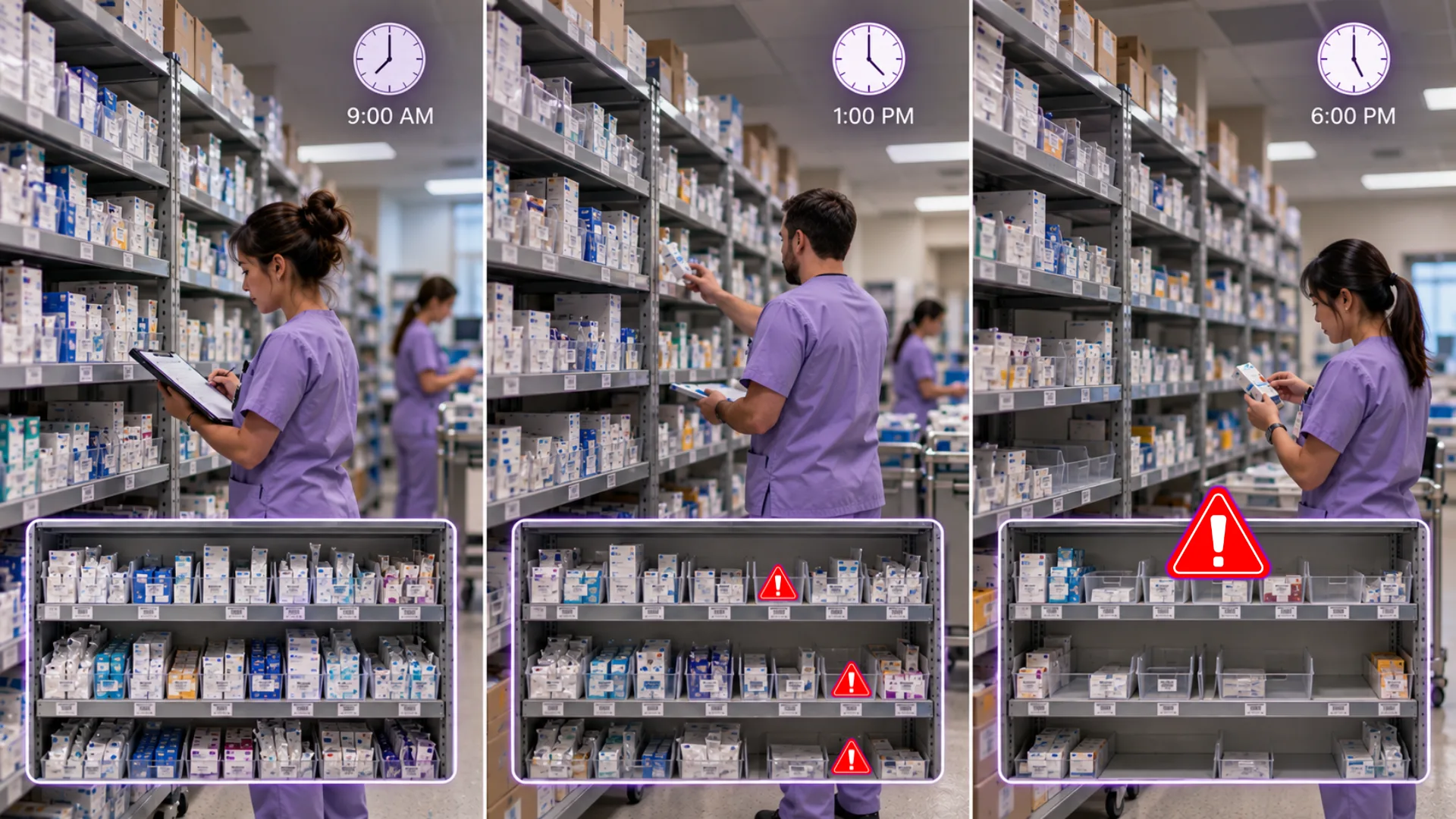
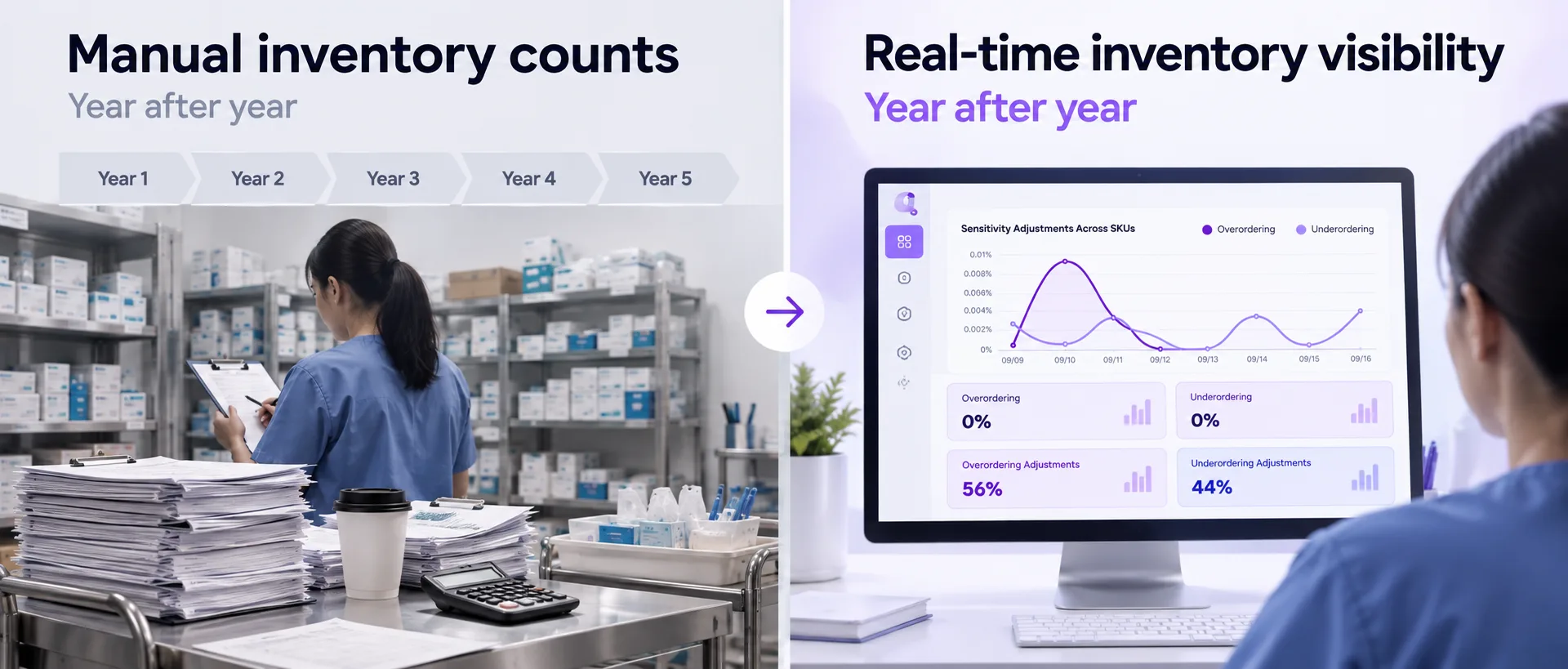
Inventory teams count shelves, check PAR levels and correct records by hand. The problem is not that the count is useless — it is that the count is a snapshot. Supplies keep moving as soon as it is finished.
- Staff spend time counting and searching.
- Inventory accuracy can drift between counts.
- Low stock may only become visible when someone checks the shelf.
Stage 2: Continuous Inventory Visibility
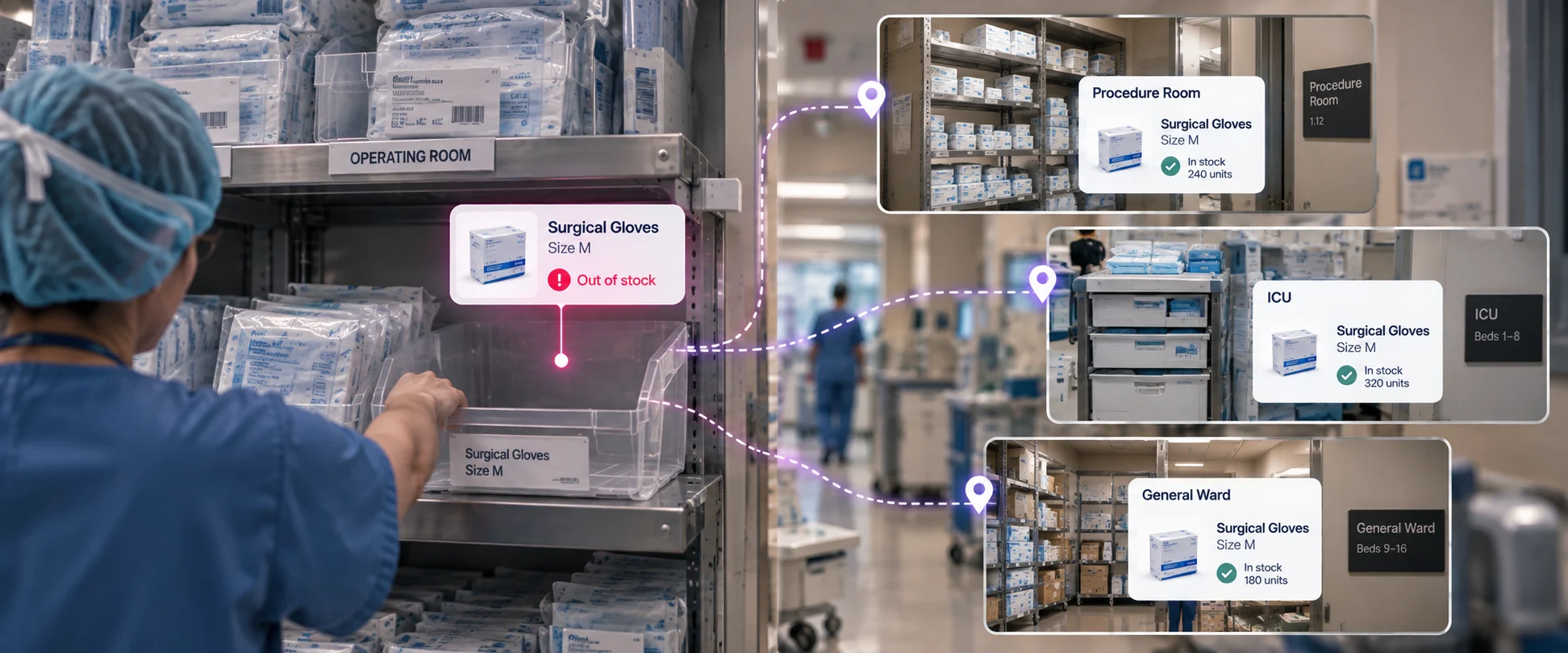
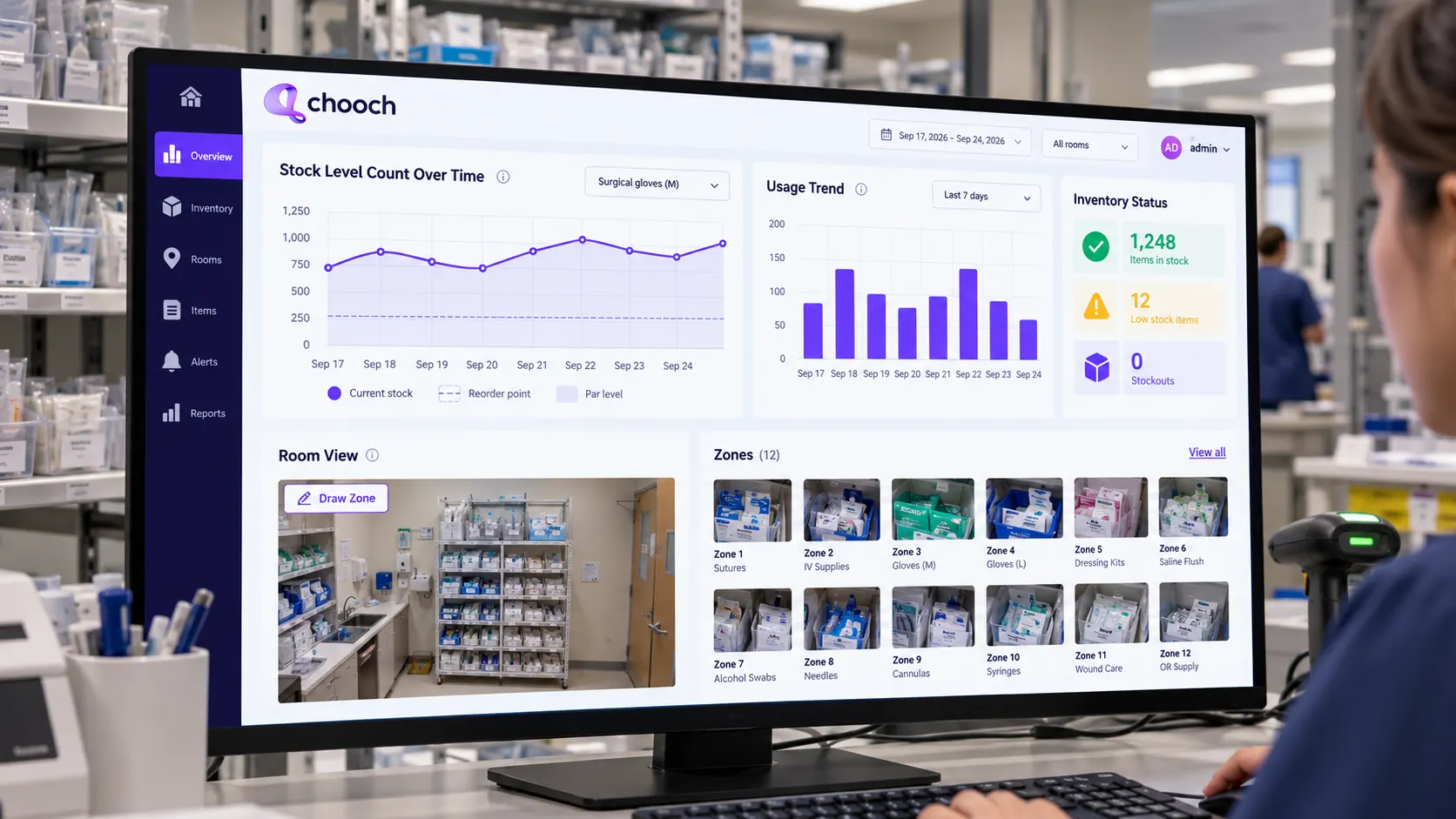
The next step is knowing what is available without waiting for the next cycle count. Vision AI can monitor configured shelves, bins, racks and carts and create a more current view of inventory as supplies are used and replenished.
This changes the question from “What did we count?” to “What is available now?”
Stage 3: Manage the Exceptions, Not Every Item
Once inventory is visible more continuously, staff do not need to give every shelf the same attention. They can focus on the situations that need action.
- Low-stock or out-of-stock conditions
- Items approaching PAR thresholds
- Unusual consumption or depletion
- Locations that need replenishment
Stage 4: Smarter Replenishment
Better inventory data can support better replenishment. Instead of relying only on a scheduled count or a static record, teams can use current inventory and consumption signals to decide what needs to be replenished and when.
Existing ERP or MMIS workflows can remain the system of record while inventory intelligence helps provide more timely demand signals.
Stage 5: Predictive Inventory
With stronger consumption data over time, inventory management becomes less reactive. Usage patterns can help teams anticipate demand, identify recurring shortages and make better-informed inventory decisions.
- Which products are moving fastest?
- Where are shortages repeatedly appearing?
- Are PAR levels still appropriate for actual usage?
- Where is inventory sitting without being used?
Stage 6: Toward More Autonomous Inventory
Autonomous inventory does not mean removing people from supply chain decisions. It means removing unnecessary manual steps from the workflow.
The goal is an environment where inventory is monitored continuously, exceptions are surfaced automatically, and replenishment decisions are supported by current demand signals — while hospital teams keep control of purchasing and operational decisions.
What Changes Along the Way?
- Manual counting → continuous visibility
- Searching shelves → exception-based work
- Reactive replenishment → earlier demand signals
- Periodic accuracy → a more current inventory position
- Historical usage → stronger consumption intelligence
Where Chooch Fits
Chooch uses Vision AI to turn hospital supply locations into more intelligent, self-monitoring environments. It can reduce dependence on manual counting, provide visibility across monitored locations, and support inventory and replenishment workflows with current visual data.
Chooch reports 95% fewer stockouts, 50% higher staff productivity and 40% inventory optimization in its hospital supply chain materials.
Start With Visibility
The journey to autonomous inventory does not start with automation for automation’s sake. It starts by closing the gap between the inventory record and the physical shelf.
When teams can see what is actually available, they can spend less time counting, react earlier to shortages and build toward smarter, more automated inventory operations.
Talk to our team to explore what the journey to autonomous inventory could look like in your hospital.