
The price of a hospital inventory system is not the same as the cost of running it.
A software subscription or implementation quote may be the easiest number to compare, but it is only one part of the five-year picture. Hospitals also need to account for the people, processes and infrastructure required to keep inventory accurate after the system goes live.
Manual counts, scanning workflows, tags, replacement hardware, integrations, training and ongoing data maintenance can all affect total cost. So can the operational consequences of inventory that is still inaccurate: stockouts, excess inventory, urgent replenishment and staff time spent resolving discrepancies.
A useful five-year comparison therefore asks a broader question: what will it take to operate this inventory model every day?
Year-One Price Is Only the Starting Point
Hospital inventory management technology is often evaluated through visible implementation costs: software, hardware, integration and deployment. Those costs matter, but they do not show how much work the operating model will require after launch.
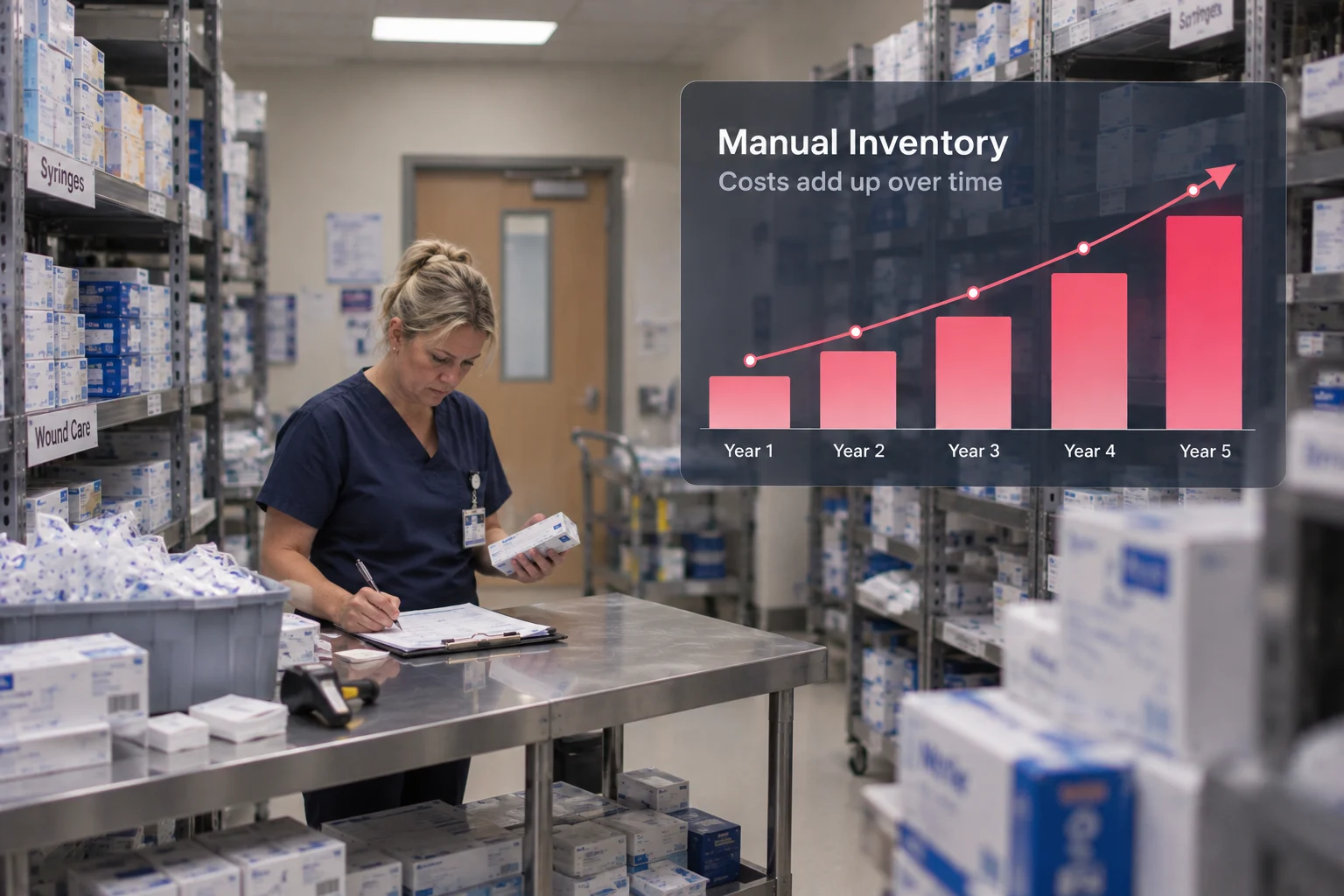
A system that depends heavily on people to scan, count, reconcile or maintain inventory data can continue generating labor costs year after year. A lower initial price can therefore become less attractive if the hospital must keep adding manual effort to maintain accuracy.
What Belongs in a Five-Year Cost Model?
A realistic total-cost model should include both technology costs and the operational work required to support the system.
- Software licensing or subscription costs
- Implementation and configuration
- Hardware and replacement equipment
- ERP and procurement integrations
- Training and change management
- Manual counting, scanning and reconciliation labor
- Consumables or tags required by the capture method
- Ongoing support and system administration
- Inventory data and PAR-level maintenance
The exact mix will vary by technology and hospital environment. The important point is to compare the full operating model, not just the vendor quote.
The Labor Model Can Change the Economics
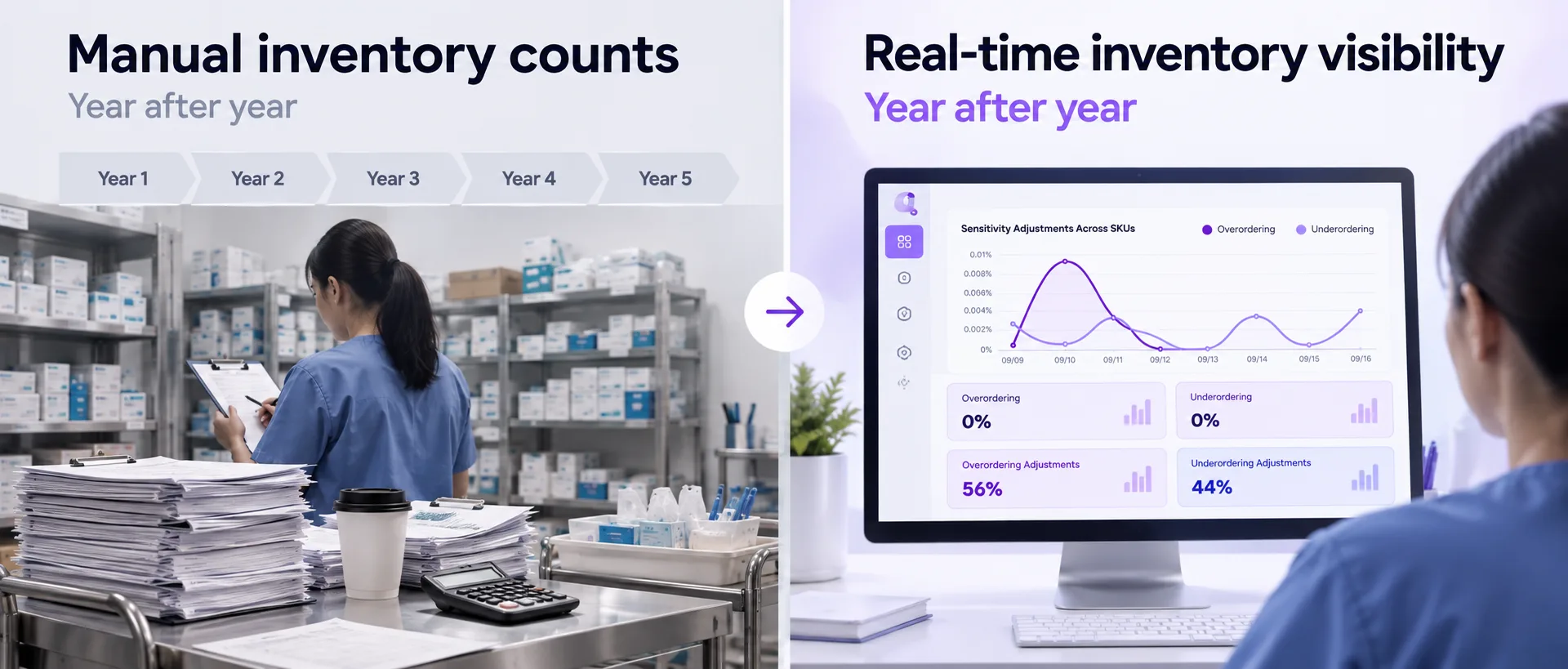
Inventory systems do not all capture physical inventory in the same way. Some depend on manual entry or periodic counts. Others require staff to scan products or maintain tagged inventory.
Those workflows can work, but they should be included in the financial model because the labor repeats every day, week or month.
If nurses or Supply Chain teams are still spending significant time counting, searching, correcting records or responding to shortages, the hospital is paying for that activity even when it does not appear on the technology invoice.
Inaccuracy Has a Cost Too
The five-year cost of an inventory system should also consider what happens when recorded inventory does not match what is physically available.
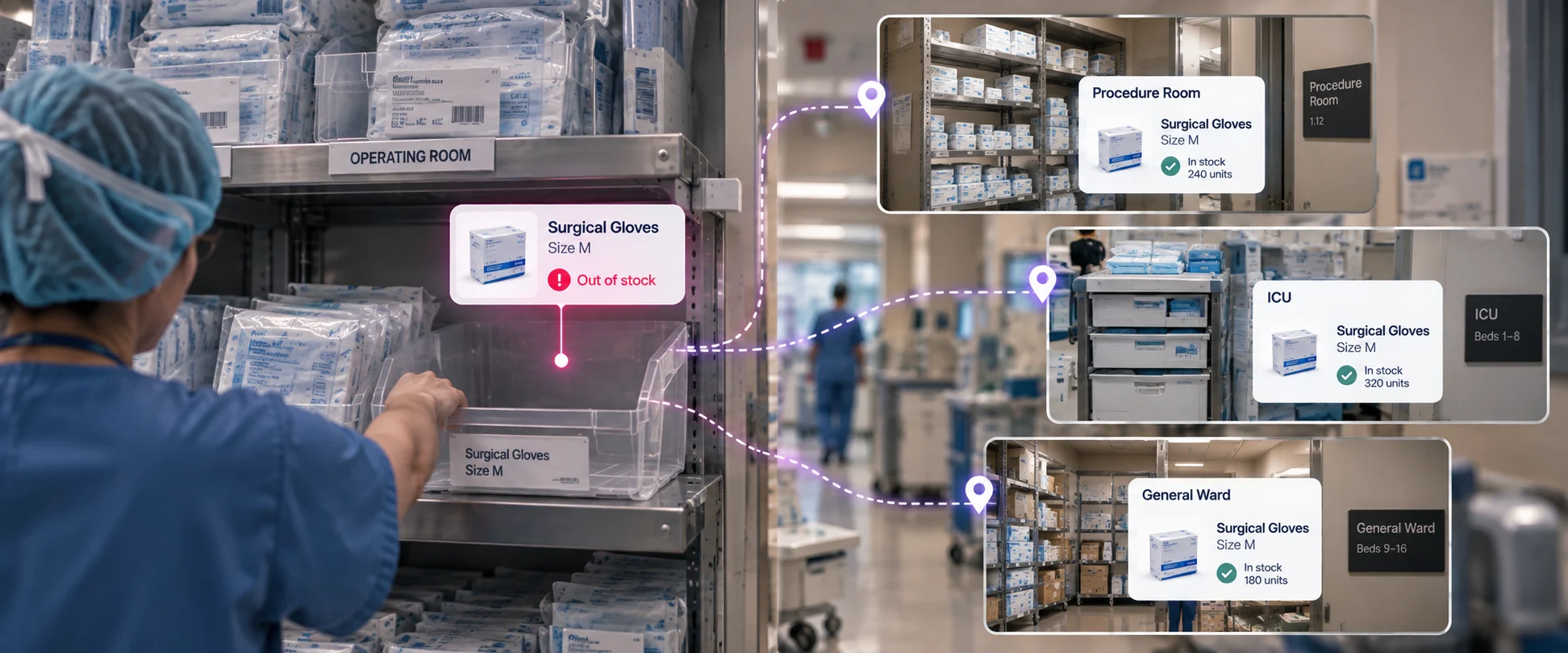
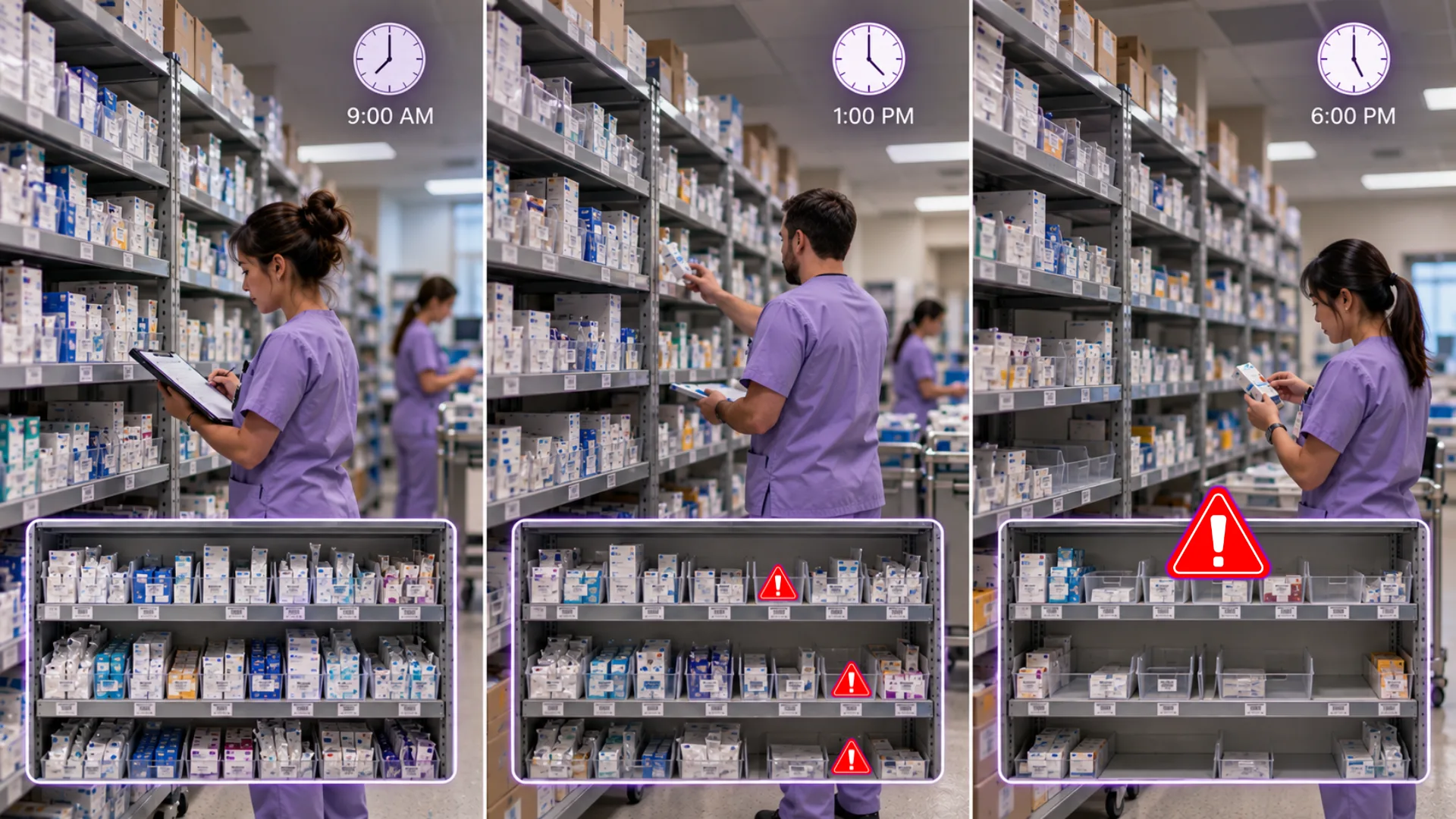
Periodic counts establish accuracy at a point in time, but products continue to move between counts. As inventory records drift, hospitals can experience shortages in one location while carrying excess stock in another.
That creates costs through urgent replenishment, supply searches, manual corrections and additional safety stock held to compensate for uncertainty.
A system can be inexpensive to buy and still be expensive to operate if teams do not trust the inventory information it produces.
More Inventory Is Also Part of Total Cost
Technology cost is usually treated as an expense. Inventory itself is capital.
When teams lack confidence in availability or replenishment timing, they may raise PAR levels or keep additional safety stock. That can tie up working capital and increase the amount of product sitting across supply rooms.
A five-year business case should therefore look at whether the inventory model helps the hospital right-size stock as well as whether it reduces administrative effort.
How the Capture Method Changes Five-Year Cost
One of the most important questions is how inventory data gets created.
If accurate inventory depends on a person touching, scanning or counting each item, the hospital should model that recurring effort over the full five years.
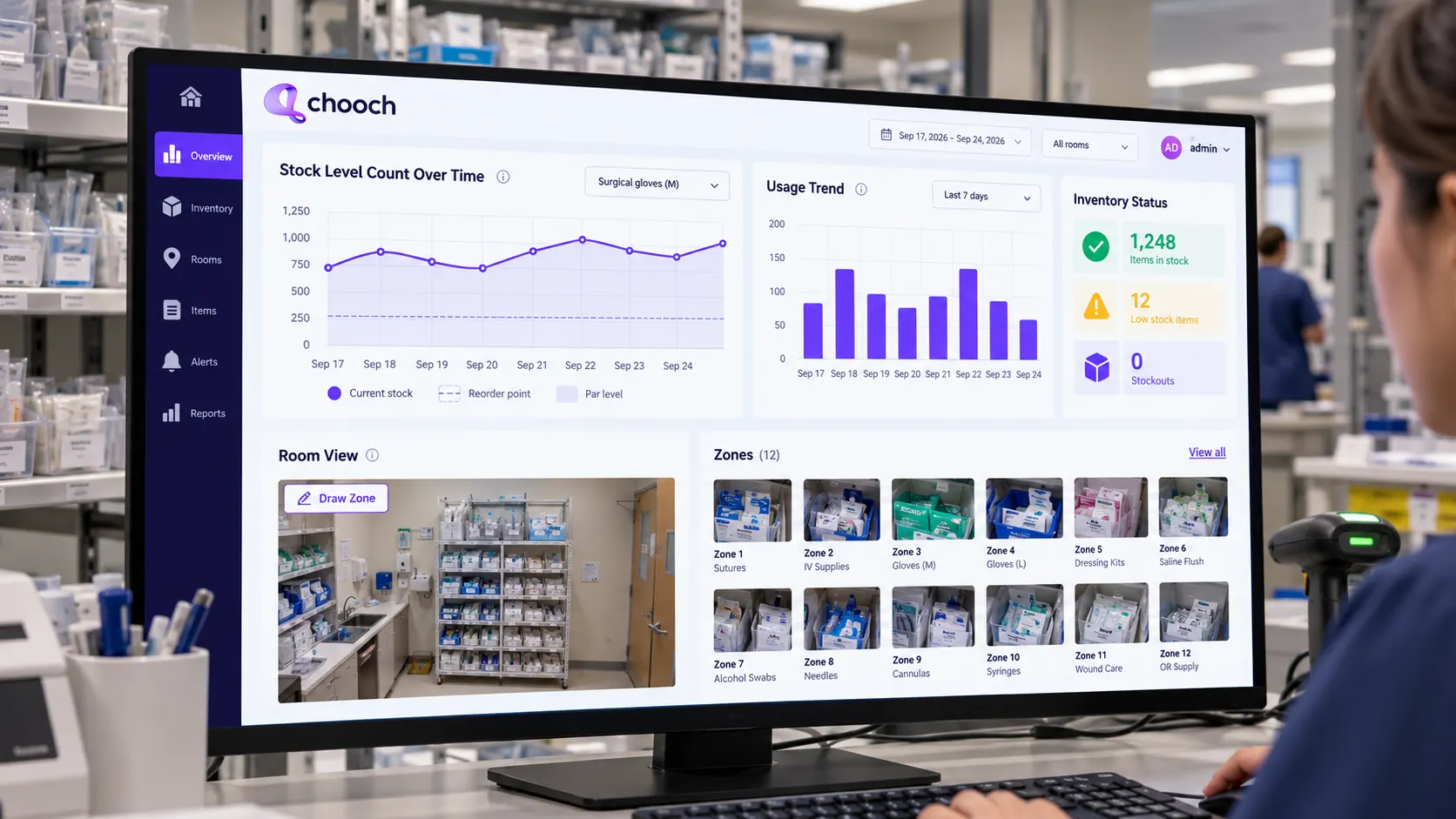
Chooch uses Vision AI-powered smart cameras to track inventory across monitored supply environments without relying on barcode scanning, RFID tags or manual counting for every inventory event. The system can generate current inventory information and purchasing reorder signals while reducing the amount of repetitive inventory work required from staff.
Don’t Forget Integration and Replenishment
Inventory visibility creates more value when it connects to the hospital’s existing procurement workflow.
During onboarding, inventory thresholds such as minimum, target and maximum levels can be configured by SKU and location. Those thresholds can be tuned as usage patterns become clearer.
When inventory reaches a configured threshold, replenishment signals can feed into purchasing workflows rather than requiring staff to discover the shortage and start the process manually.
For a five-year cost model, this matters because automation should be evaluated across the workflow – from detecting inventory conditions through taking replenishment action.
Five Questions Finance Should Ask
Before comparing hospital inventory systems, Finance, Supply Chain and IT should ask:
- What recurring labor is required to keep inventory accurate?
- Does the capture method require scanners, tags or other consumables?
- What hardware will need to be maintained or replaced?
- How does the system connect inventory conditions to replenishment workflows?
- What happens to stockouts, excess inventory and staff workload after implementation?
These questions help separate the purchase price from the true cost of operating the inventory system.
The Cheapest System Is Not Always the Lowest-Cost System
Over five years, hospital inventory economics are shaped by more than software fees.
The real cost includes the labor required to maintain the process, the infrastructure required by the capture method, the inventory carried because of uncertainty and the operational work created when stock information is wrong.
The strongest business case looks at all of those factors together.
See how Chooch Vision AI helps hospitals automate inventory visibility, reduce manual inventory work and support more intelligent replenishment.