
A cycle count can make inventory accurate. It cannot keep it accurate.
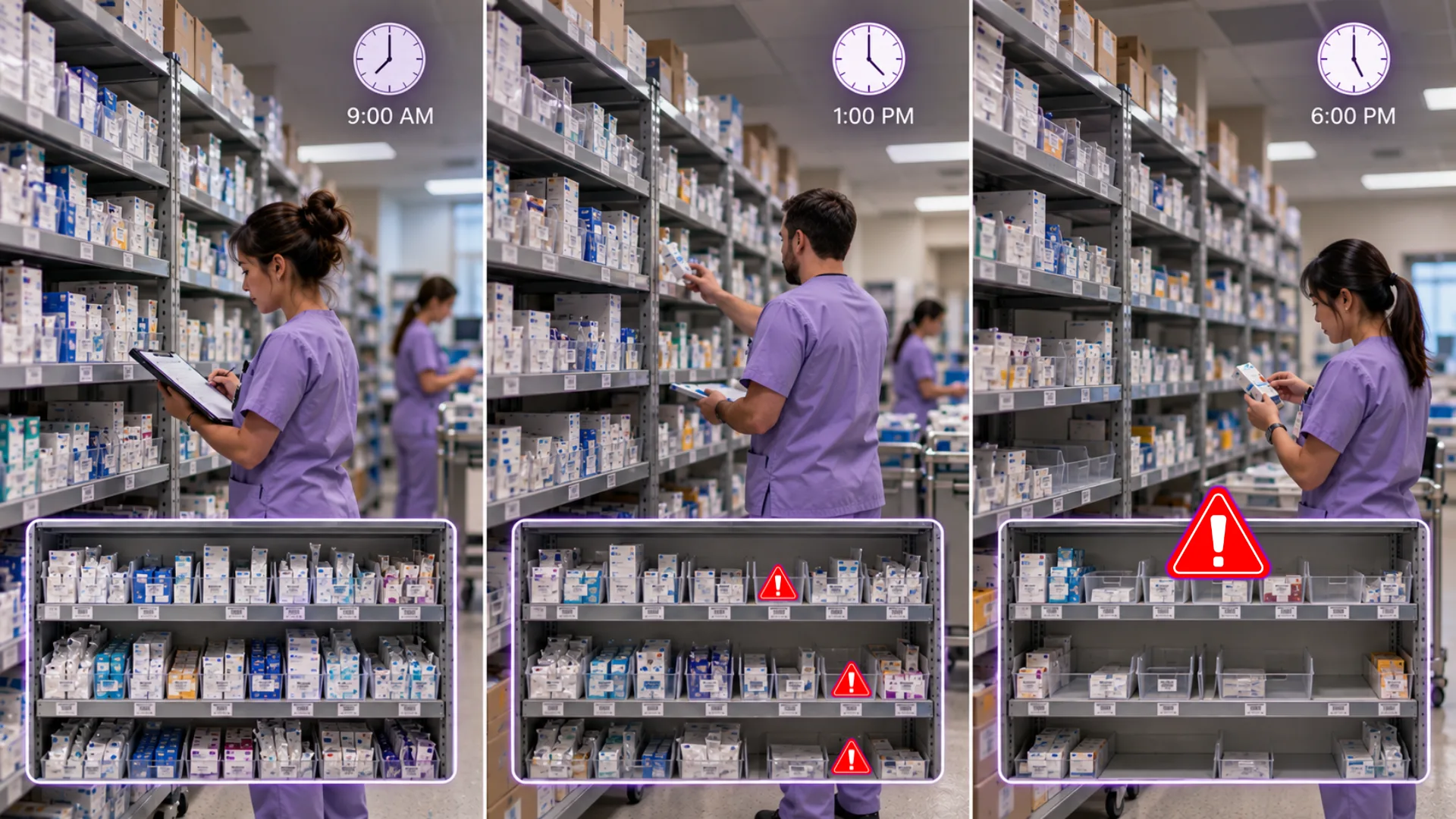
At 9:00 a.m., a hospital supply room can be counted, reconciled and completely correct. Gloves, syringes, dressings, IV sets and other everyday supplies are where the system expects them to be.
By 1:00 p.m., the room has changed. Clinicians have taken supplies. Bins have been replenished. Products may have moved between locations. Fast-moving items may be disappearing faster than expected. If those movements are not captured, the physical shelf and the inventory record are already telling two different stories.
That is the weakness of periodic counting: it proves what was there at one moment. Hospital inventory keeps moving after the count is finished.
The Count Is Right. Until It Isn’t.
Cycle counting is useful because it finds discrepancies and resets the record. But it is still a snapshot. As soon as products are consumed, restocked or moved, accuracy depends on those changes being captured.
In a hospital, that matters because inventory decisions happen all day. A supply chain team may be looking at an on-hand quantity, a PAR status or a replenishment queue while the shelf itself has already changed. Chooch’s current hospital inventory material describes this as the gap between periodic manual counts and inventory activity captured as it happens.
Supplies move all day. Inventory records don’t always move with them.
Across hundreds of products and locations, that gap can quickly turn an accurate morning count into outdated inventory data by the afternoon.
Why More Counting Doesn’t Remove the Blind Time
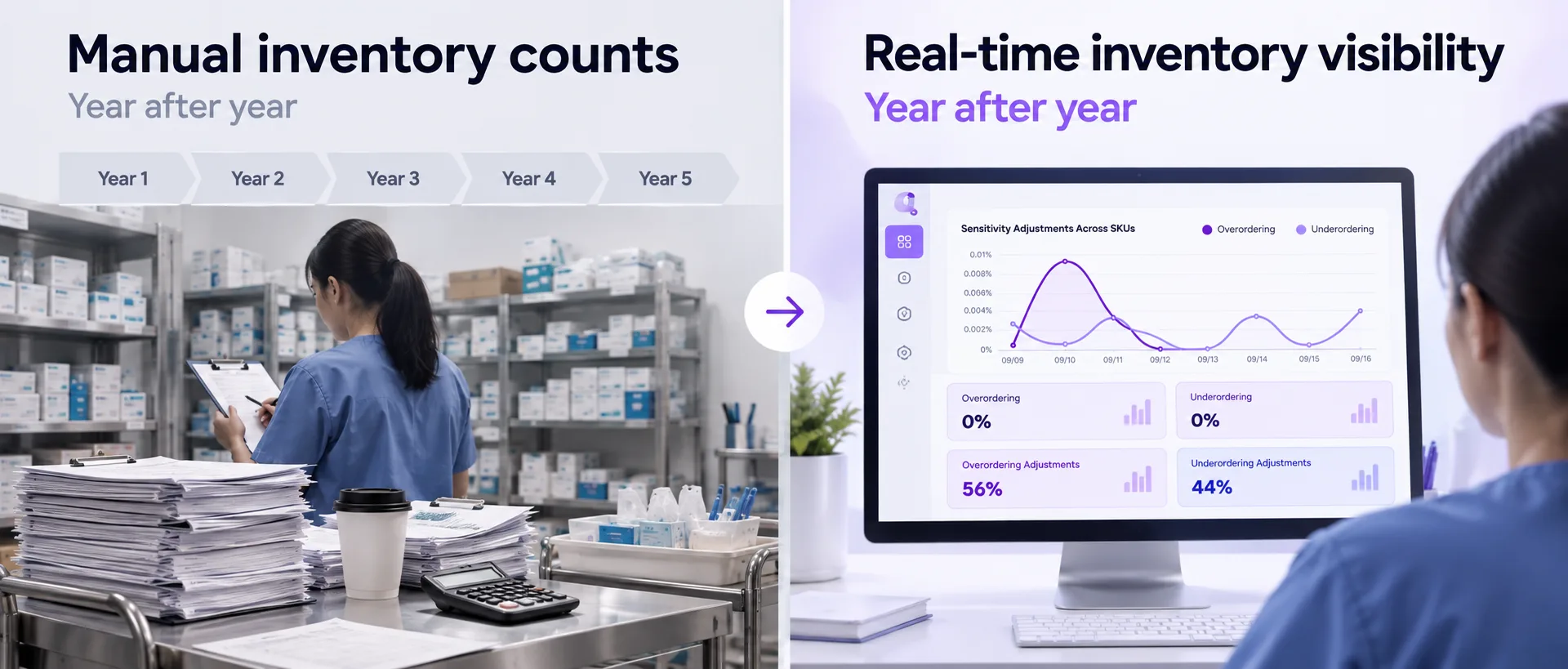
When inventory accuracy drops, the natural response is often to count again. More frequent counts can shorten the time between corrections, but they do not eliminate the period when inventory is changing unseen. They also keep supply teams walking rooms, checking bins and reconciling records.
The better question is not “How often should we count?” It is “How do we keep the inventory position current between counts?”
PAR Can Only React to What the System Knows
PAR and min/max levels are only useful when the on-hand quantity behind them is current. If the system thinks a bin still has enough stock, a replenishment signal can come too late. If the system understates what is physically available, teams can replenish unnecessarily and build excess stock.
This is why simply raising PAR levels is not the same as improving availability. Chooch’s hospital inventory approach uses actual consumption and current shelf conditions to help teams right-size PAR thresholds and respond to depletion based on what is happening, not only on the last manual check.
From a Snapshot to a Live Inventory Position
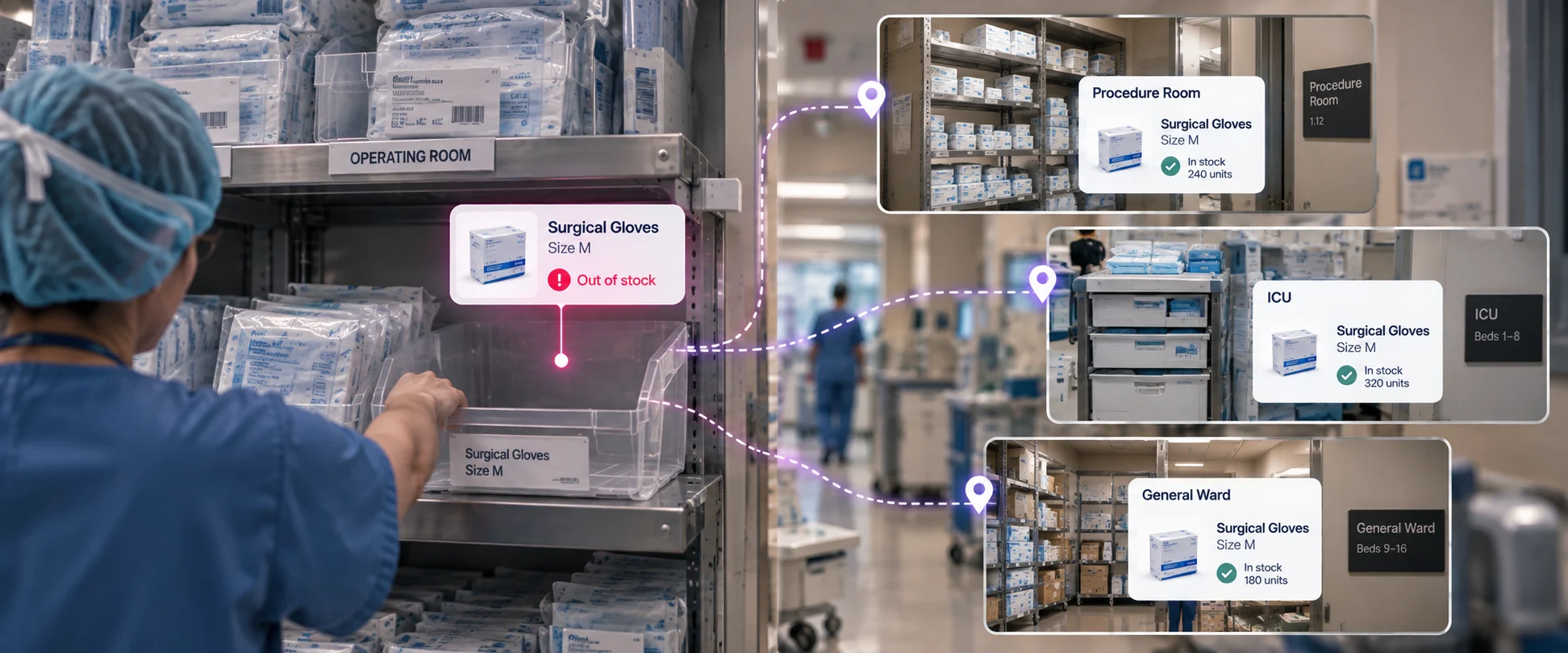
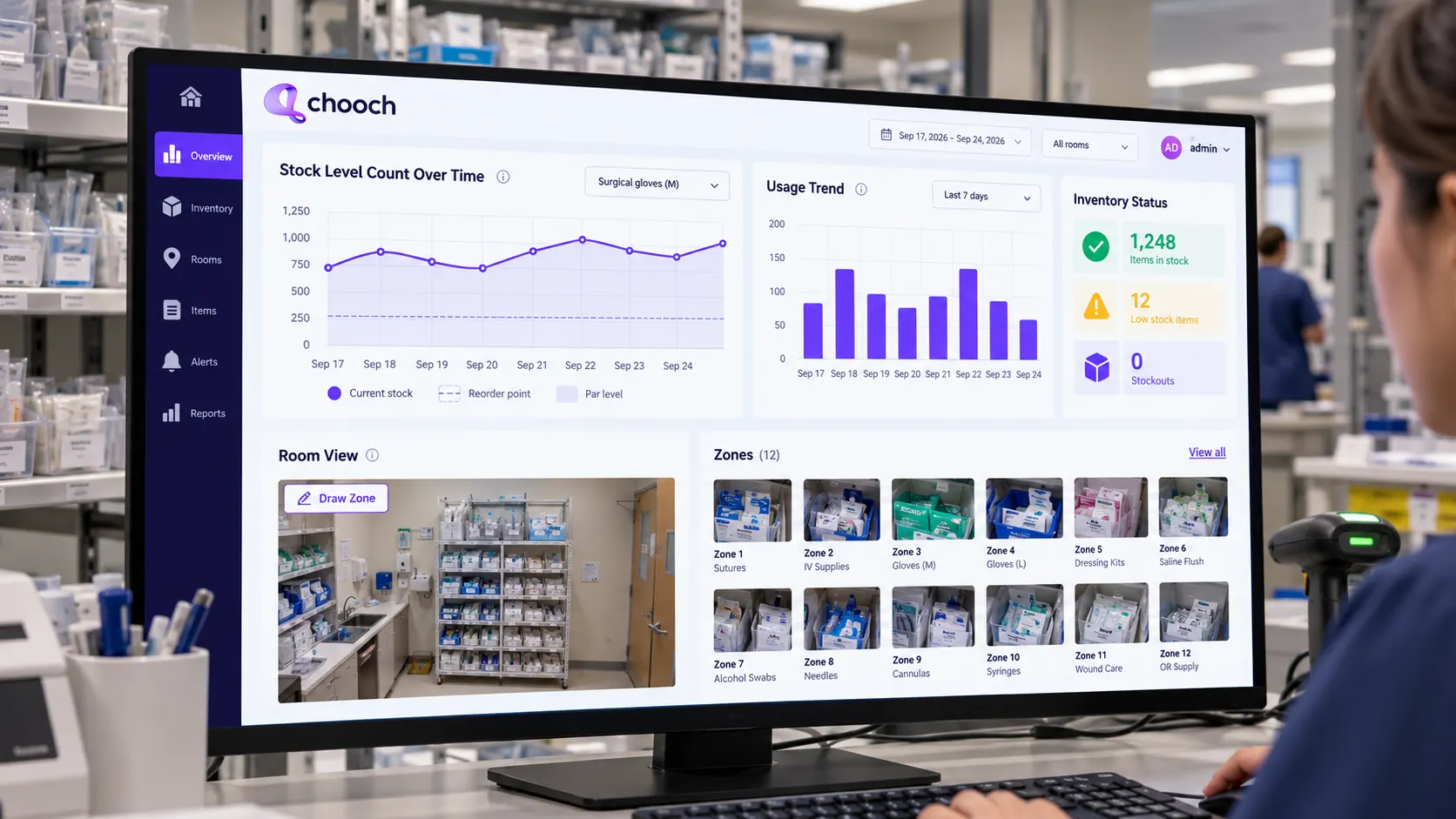
Chooch uses fixed camera sensors to monitor configured hospital shelves, bins, racks and carts. Vision AI identifies products and updates on-hand levels as supplies are removed or restocked, reducing reliance on manual counting, barcode scanning and RFID tags.
With a more current inventory position, supply chain teams can focus on what actually needs attention:
- Low-stock and out-of-stock conditions.
- PAR and min/max status.
- Consumption trends and unusual depletion.
- Replenishment activity and exceptions.
- Inventory visibility across monitored locations.
Observed inventory data can also feed existing ERP and MMIS workflows, so purchasing, approvals and financial records continue within the systems hospitals already use.
The Goal Isn’t a Better Count. It’s Less Blind Time.
A correct count at 9:00 a.m. is useful. But the operational question at 1:00 p.m. is different: what is actually on the shelf now?
Continuous inventory visibility turns accuracy from something periodically restored into something that can be maintained as supplies move. That can support:
- Earlier replenishment before shelves reach critical levels.
- Better visibility of low stock and excess inventory.
- Cleaner consumption data for planning and forecasting.
- Less manual counting, searching and reconciliation.
- Greater supply readiness at the point of care.
Chooch reports real-world hospital supply chain outcomes including 95% stockout reduction in its current website materials. The bigger shift is operational: supply teams can move from repeatedly proving what is on the shelf to acting on what needs attention.
Know What’s on the Shelf. Without Waiting for the Next Count
See how Chooch Vision AI gives hospital supply chain teams continuous visibility across monitored supply rooms and helps connect real inventory movement to replenishment workflows.