
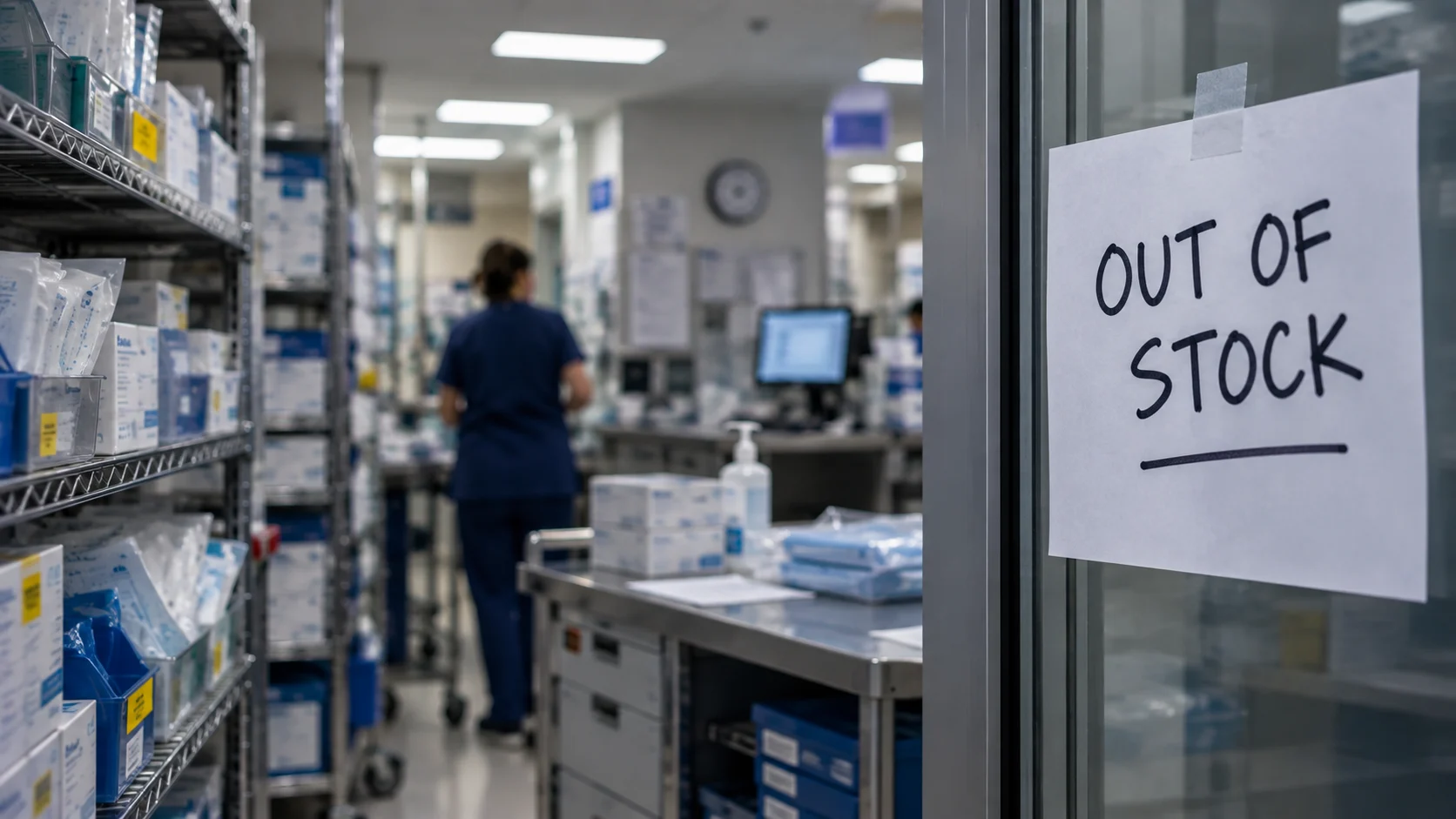
A hospital stockout rarely costs only the price of the missing item.
When a needed supply is unavailable, the impact spreads quickly. A nurse searches another room. Supply chain staff are called. An approved substitute may be needed. A rush order is placed. A procedure or clinical workflow may be interrupted while teams find what they need.
And there is another problem: the hospital may already own enough of that product. It just may not be available where it is needed.
The real cost of a stockout comes from everything that happens around the empty shelf.
What Does a Hospital Stockout Actually Cost?
The most visible cost is emergency procurement. An unexpected shortage can mean expedited shipping, rush purchasing or sourcing an alternative product. But that is only the beginning.
- Rush orders and premium freight
- Staff time spent searching for supplies
- Product substitutions
- Clinical workflow interruptions
- Additional inventory counts and corrections
- Higher safety stock
- Excess inventory held elsewhere
Individually, these may look like small events. Repeated across hundreds of products, supply rooms and clinical areas, they become a significant operational cost.
The Labor Cost You Don’t See on a Purchase Order
When a clinician reaches for an item and it is not there, someone has to find it. That may mean checking another shelf, walking to another supply room, contacting supply chain, finding an approved substitute or arranging urgent replenishment.
The cost does not appear as a line item called ‘stockout.’ Instead, it appears as time – and that time affects both clinical and supply chain teams.
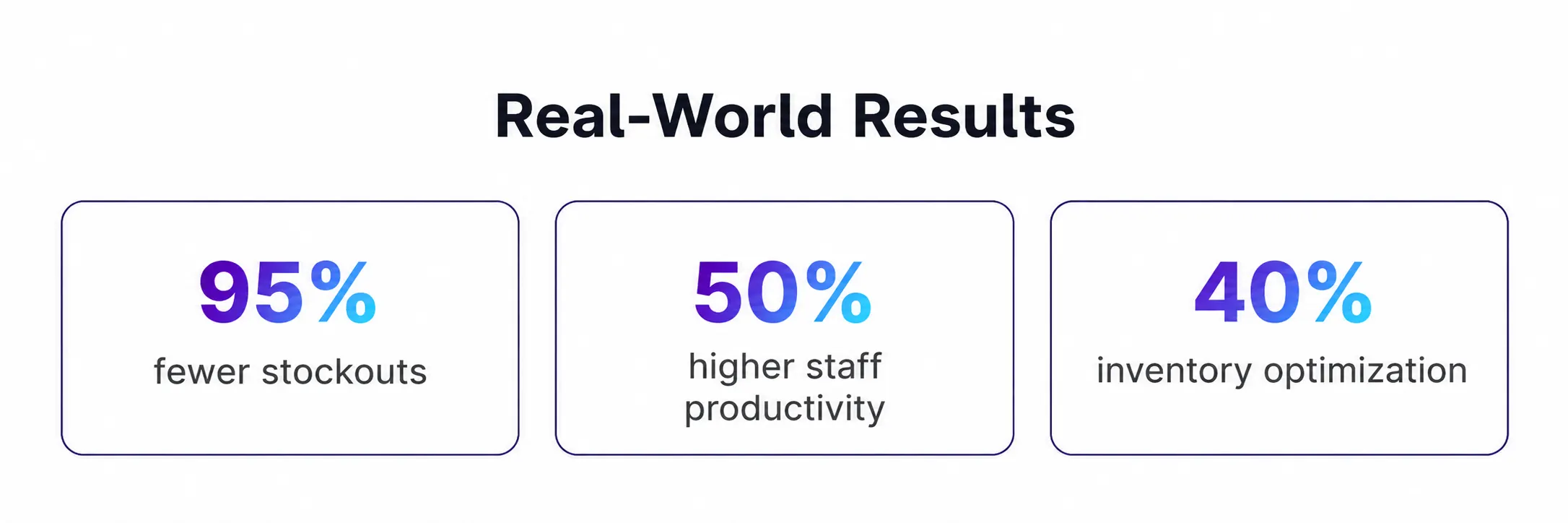
Chooch reports 50% higher staff productivity in its hospital supply chain results. Reducing manual inventory work and improving visibility can help teams spend less time counting, searching and correcting inventory and more time on higher-value work.
More Inventory Doesn’t Necessarily Mean Fewer Stockouts
A common response to shortages is to hold more inventory: raise PAR levels, add safety stock and keep more product on every shelf ‘just in case.’ But more inventory does not automatically mean better availability.
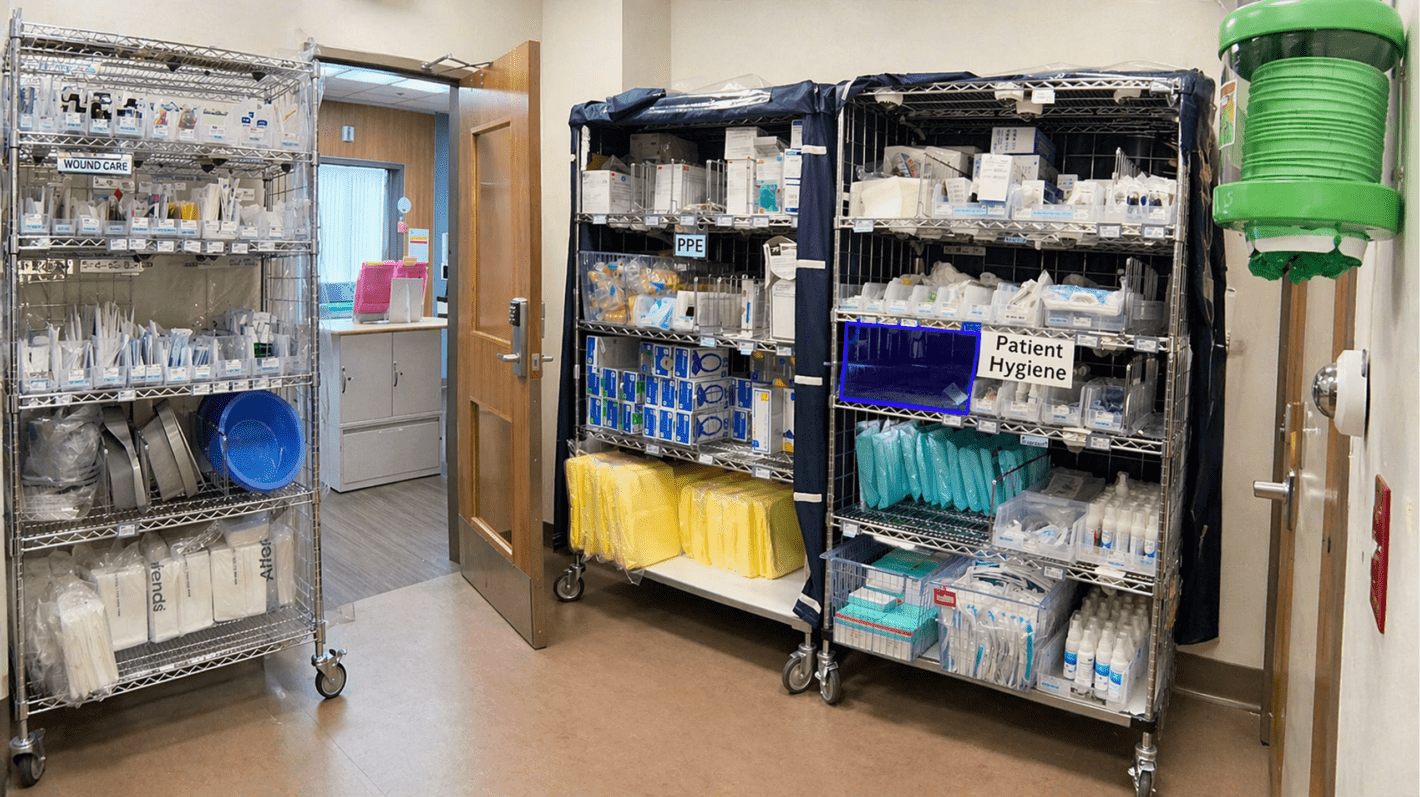
One location may have too much of an item while another runs out. A system may show sufficient inventory even when the product is missing from the supply room where it is needed.
The result is a costly contradiction: stockouts and overstock can happen at the same time.
Chooch reports 40% inventory optimization in its hospital supply chain results, showing the opportunity to improve availability without simply adding more stock.
Why Does This Keep Happening?
The underlying problem is often visibility. Periodic inventory counts provide a snapshot. At the time of the count, the system and the shelf may agree. Then products start moving again.
Supplies are consumed. Deliveries arrive. Demand changes. Different units consume the same products at different rates. Between counts, recorded inventory can drift away from what is physically available.
This is how an inventory system can say “12 in stock” while the shelf that matters is empty.
What Changes With Real-Time Inventory Visibility?
Real-time inventory visibility changes the question from ‘What did we have when we last counted?’ to ‘What is actually available now?’
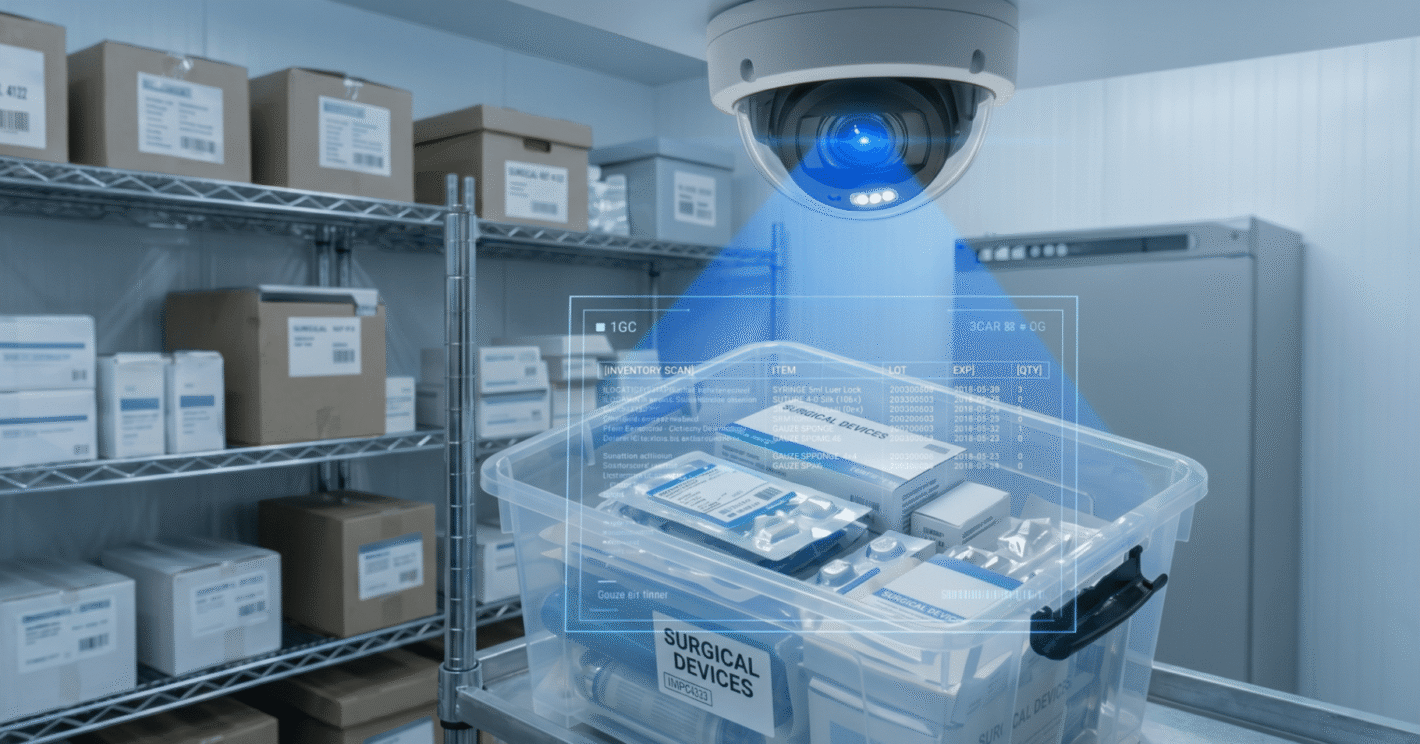
Chooch uses Vision AI-powered smart cameras to track inventory across monitored hospital supply environments. This reduces reliance on scanning, RFID tags and manual counting and gives supply chain teams a more current view of inventory conditions.
With better visibility, low inventory can be identified earlier, replenishment can respond sooner and teams can make more informed decisions about PAR levels and inventory targets.
From Reactive Replenishment to Earlier Action
Without accurate visibility, a low-stock condition can remain hidden until it becomes a stockout. That is when supply searches, substitutions and urgent purchasing begin.
With more current inventory information, teams can identify low-stock conditions earlier and act before the shortage reaches the point of care.
Chooch’s hospital supply chain results report 95% fewer stockouts. The broader value is not simply an empty shelf avoided; it is the operational activity that no longer needs to happen because the shortage was identified earlier.
Calculate the Real Cost of Your Next Stockout
The next time an item is unavailable, don’t measure only what it costs to replace it. Ask what happened because it was missing.
- How long did staff spend searching for it?
- Was urgent replenishment required?
- Did someone have to find a substitute?
- Was clinical work interrupted?
- Did the team increase PAR or safety stock afterward?
- Is excess inventory now sitting somewhere else in the system?
Those costs reveal why preventing stockouts is not simply an inventory objective. It is part of creating a more efficient, predictable and clinically ready hospital supply chain.
Stop Finding Out About Stockouts When the Shelf Is Already Empty
See how Chooch Vision AI helps hospital supply chain teams improve inventory visibility and move replenishment from reactive to more proactive inventory management.