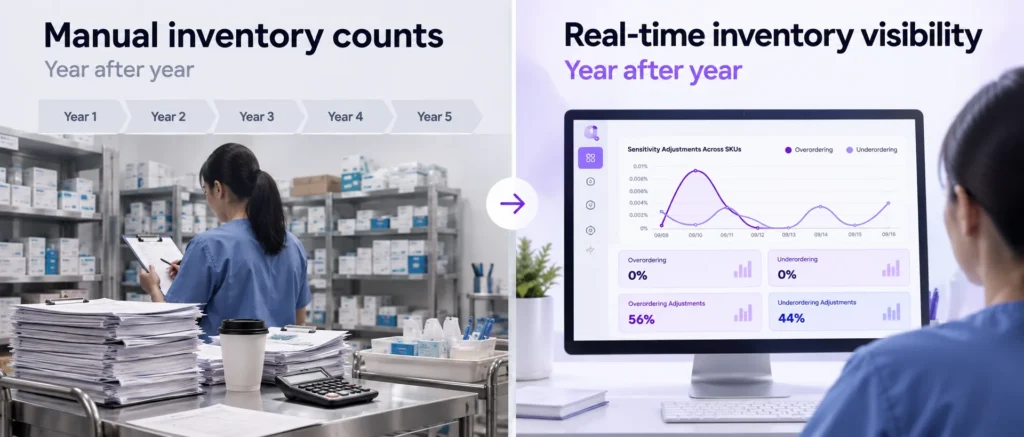


A supply room can look organised and still be difficult to manage.
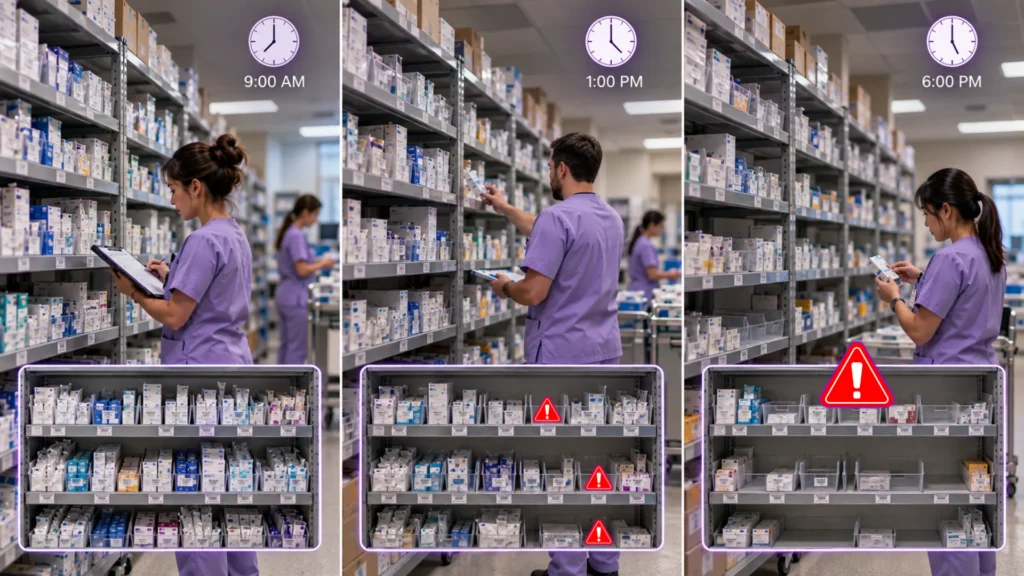
Products move throughout the day. A bin that was full at the start of a shift may be nearly empty by lunch, while another location holds more stock than it needs. If the inventory record depends on a manual count or a missed scan, the system may not reflect what is actually on the shelf. That gap is where Vision AI offers a different approach.
What Vision AI actually observes
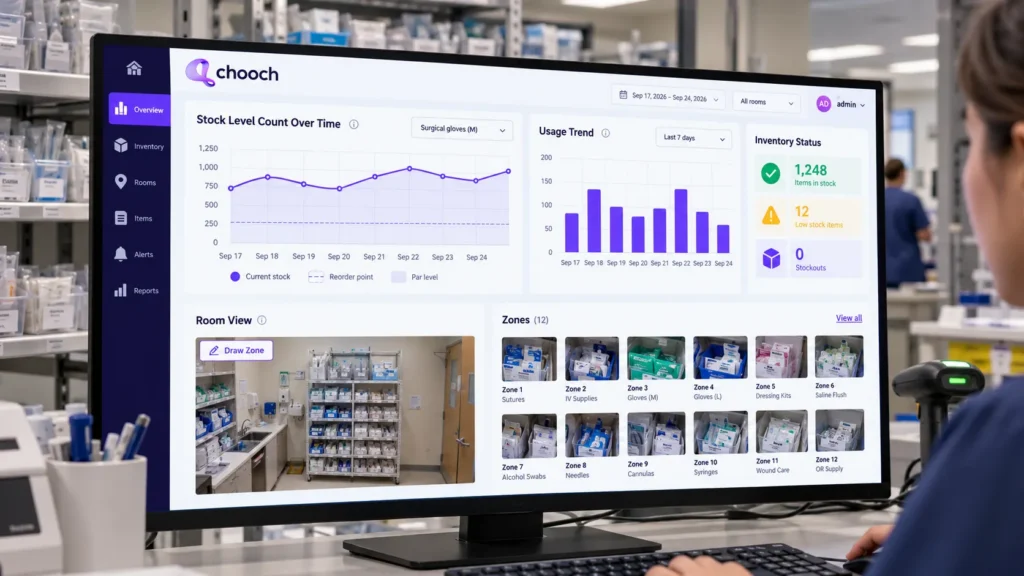
Vision AI uses cameras positioned around configured supply shelves, bins and racks to analyse the physical inventory environment. Instead of waiting for someone to count or scan an item, the system detects changes as products are removed or replenished. That information can update on-hand inventory and provide a more current view of supply levels.
This is not the same as simply adding another dashboard. The important change is the source of the information: observed shelf conditions rather than a record that may be hours or days old.
From shelf activity to replenishment
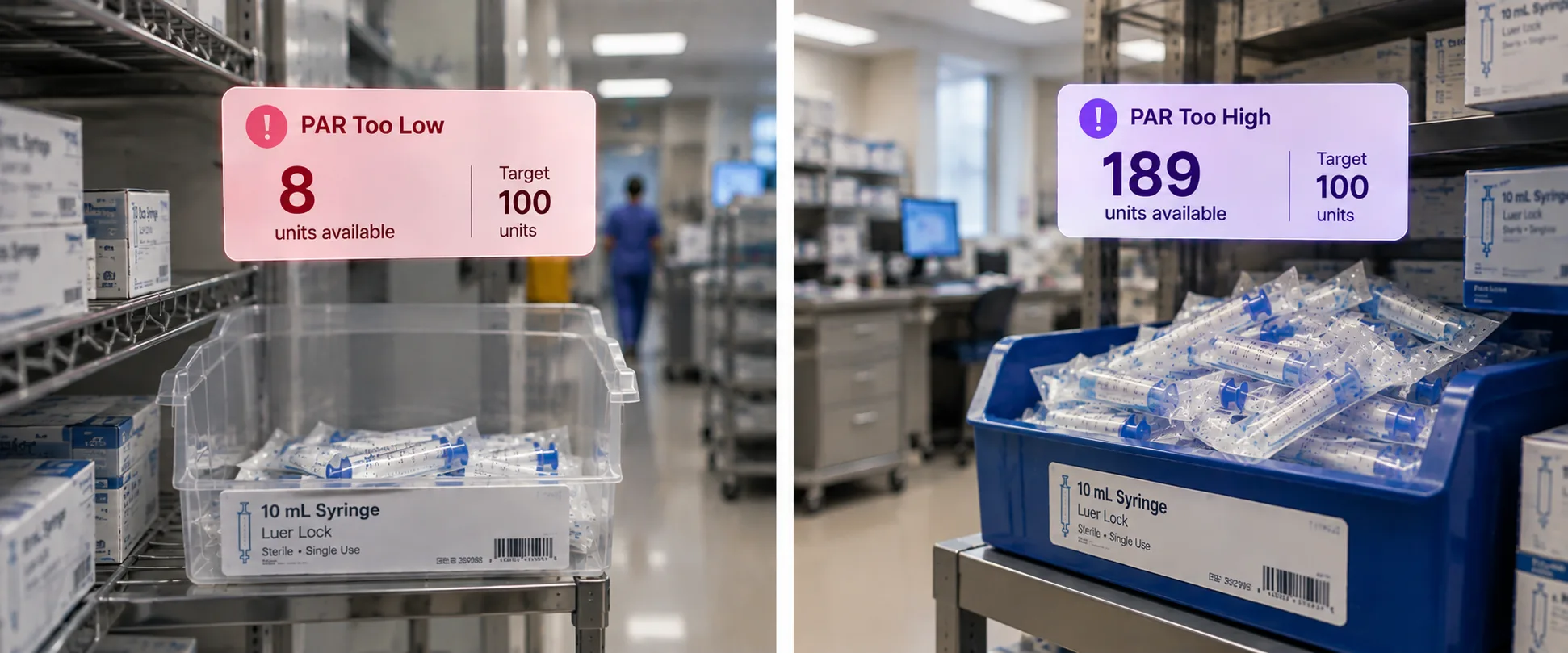
Consider a high-use item in a departmental supply room. As stock declines, the system can compare the observed inventory level with its configured PAR or min/max threshold. A low-stock condition can generate a replenishment signal, helping the supply chain team act before the bin is empty.
Chooch connects this inventory intelligence with existing ERP and materials management workflows. The hospital’s established systems continue to manage purchasing, approvals and financial records; Vision AI supplies more timely information about what needs attention.
The value of seeing across locations
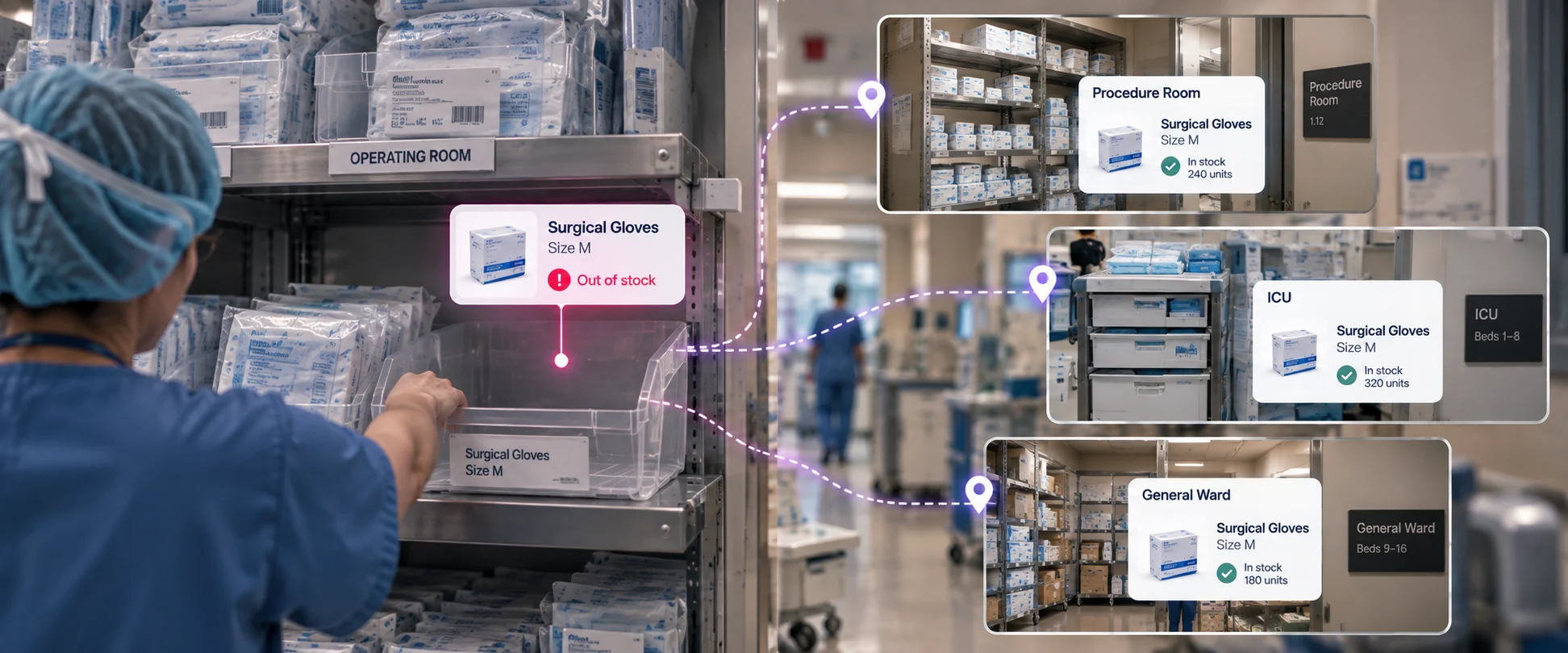
A hospital is not one storeroom. It is a network of clinical supply spaces, each with different products and consumption patterns. When those spaces are monitored consistently, supply chain teams can review on-hand levels, depletion and replenishment activity across locations without relying entirely on physical rounds.
That visibility also helps identify the opposite of a shortage: slow-moving stock and excess quantities that occupy space and tie up budget. A better inventory picture supports both availability and cost control.
Where PAR analytics fits
A PAR level should not be treated as a number that is set once and forgotten. Consumption changes with service mix, staffing patterns and demand. Chooch’s PAR Analytics and Optimization capability uses room, item and bin data, stockout patterns and ordering history to help teams review proposed minimum and maximum levels. Recommendations can be examined and back-tested before changes are made.
The distinction matters: Vision AI improves visibility into what is happening, while analytics helps teams decide whether their replenishment settings still make sense.
A practical starting point
Start with a supply area where manual counts are burdensome or recurring shortages are visible. Establish a baseline for counting time, inventory discrepancies, urgent replenishment and excess stock. Then evaluate whether continuous monitoring produces better operational information and a manageable workflow for the people who use it.
Vision AI is most useful when the result is not more data to review, but fewer routine tasks and clearer decisions. Chooch brings shelf-level observation, inventory intelligence and replenishment workflows together to help hospitals move in that direction.
Where conventional tracking leaves gaps
Barcode and RFID workflows can be effective when every relevant movement is captured. In practice, many clinical supply areas operate at a pace where the physical handling of products does not always generate an immediate digital event. Staff may remove several items during a busy period, relocate stock temporarily, or replenish a shelf before a count is recorded. The result is a familiar mismatch: the system contains a quantity, but the team still has to walk to the room to find out what is actually available.
Vision AI addresses a different part of that problem. By analysing configured shelf and bin views, it creates an additional source of inventory information tied to physical conditions. It does not mean every item in every hospital can automatically be recognised in any environment. Camera coverage, item presentation, location configuration and operational exceptions all matter. The useful question for a hospital is which high-friction supply processes could become more dependable when inventory is observed more frequently.
What supply chain leaders should measure
An effective evaluation should separate technical performance from operational impact. First, assess whether the monitored location produces sufficiently reliable inventory signals under ordinary conditions, including replenishment, partial bins and changes in product placement. Then examine whether those signals improve the workflows the organisation actually cares about.
Useful baseline measures include the time spent on manual counting, the number of emergency supply requests, recurring inventory discrepancies, time from low-stock identification to replenishment, and stock held beyond local demand. These measures should be defined before implementation, with a consistent method for comparing results afterward. A decrease in counting effort, for example, is valuable only if it does not create an unmanageable exception-review burden elsewhere.
The same discipline applies to financial claims. Results from a specific deployment can illustrate what is possible, but they should not be treated as a guaranteed outcome for every hospital. Location mix, inventory policies, staffing and existing systems all influence the return.
How an exception becomes an action
Inventory visibility matters most at the point where someone can act. Imagine a monitored bin approaching its replenishment threshold. The system identifies a change in its observed level, compares that information with configured rules and makes the condition visible to the responsible team. Depending on the integration and local workflow, the next step may be a replenishment task, an order signal or a review by supply chain staff.
Now imagine the opposite case: a product repeatedly remains above its target level while other locations use it quickly. That pattern may justify reviewing the location’s PAR settings, checking whether the product is still needed in the same quantity, or considering a different distribution approach. Vision AI is not making the clinical or purchasing policy on its own. It is making the physical inventory pattern easier to recognise.
This distinction helps avoid a common implementation mistake: treating an alert as the finished product. A useful system should help teams understand what the alert means, who owns the response and how completion is confirmed.
The broader architecture matters
Hospitals rarely have the option to replace their ERP, materials management and procurement systems simply to adopt a new inventory capability. A practical Vision AI deployment therefore needs clear data flows and responsibilities. The inventory platform may observe stock and surface replenishment information, while the hospital’s existing systems retain established purchasing, approval and accounting processes.
Chooch’s portfolio also reflects that operational separation. Inventory monitoring supports visibility; PAR Analytics and Optimization supports evidence-based review of inventory settings; and Lighthouse supports coordination of room deployment and go-live work. Those are related problems, but they should not be confused. A camera cannot solve a poor rollout plan, and a rollout tracker cannot correct an outdated PAR level.
For decision-makers, the question is not just whether a model detects inventory. It is whether the resulting information can be trusted, integrated and used consistently across the hospital.
Questions to ask before choosing a platform
Ask which shelf conditions the platform can monitor reliably, how item and location mappings are maintained, and what happens when a camera view is obstructed. Clarify how inventory signals reach the existing materials management system and whether the hospital can review or override exceptions. Request an implementation plan that includes training, operational ownership and ongoing performance checks. Finally, define what success looks like for the pilot: less counting effort, fewer avoidable stockouts, faster replenishment or better visibility into excess stock. A strong evaluation tests these outcomes in daily operations, not only during a product demonstration. Vision AI should earn its place by improving the reliability of the work surrounding the shelf.
Explore Chooch Vision AI for hospital inventory management at chooch.com.